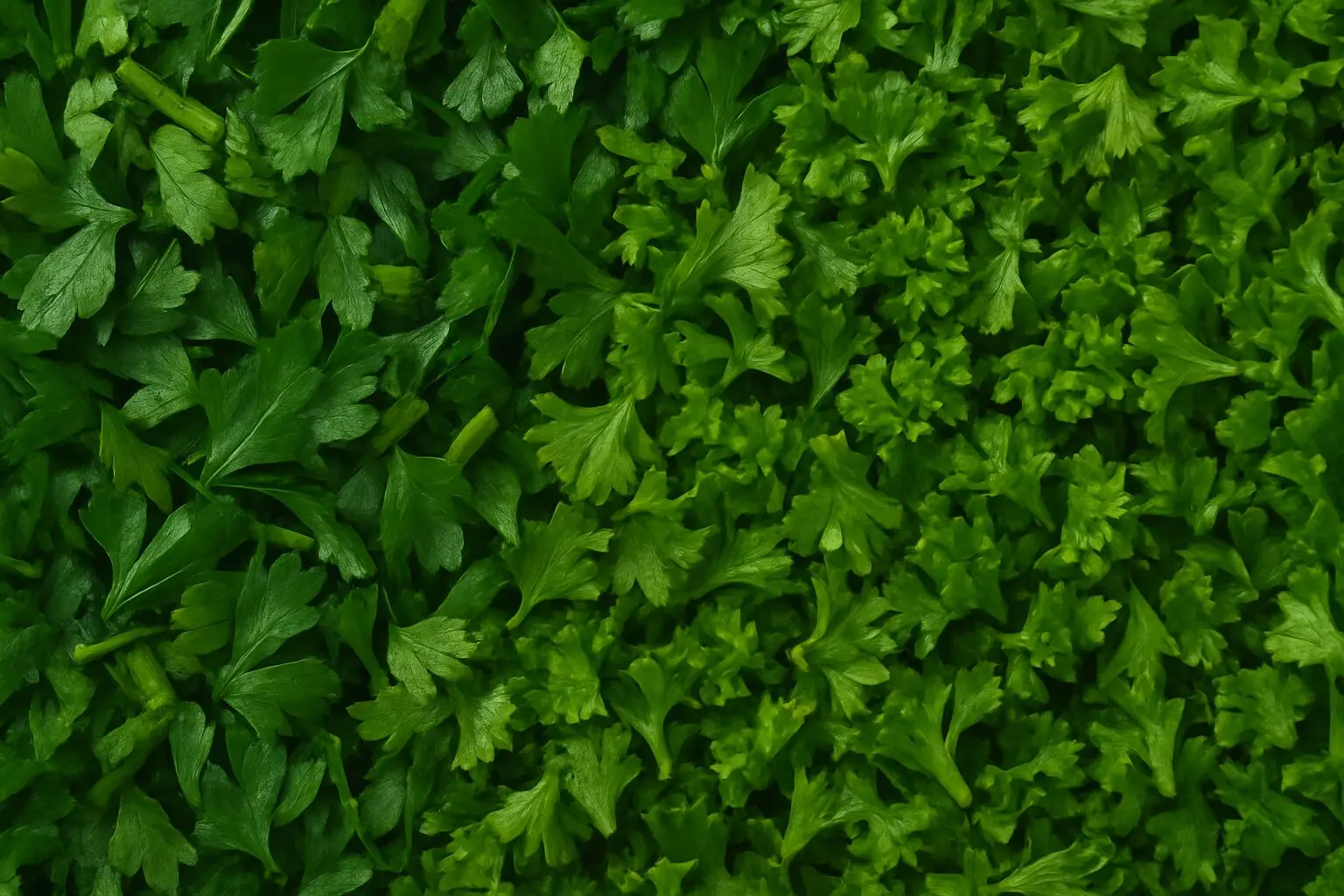
Petroselinum crispum
Parsley is usually treated as a garnish, which is a pity. Gram for gram, it is one of the most nutrient-rich herbs in the kitchen, with remarkable amounts of vitamin K and vitamin C, and a fresh flavor that lifts almost any savory dish.
If you use it by the handful rather than the sprig – in salads, sauces and green smoothies – parsley becomes a real contributor to your diet. Here is what it offers.
What makes parsley special?
Parsley leaves are rich in vitamins K, C and A (as beta-carotene), iron and potassium, along with essential oils and flavonoids such as apigenin. The root, popular in Central European cooking, is milder and works like a vegetable in soups and purées. Parsley also stimulates the appetite and digestion, which is one reason it traditionally accompanies heavier meals.
At 133 mg per 100 g, fresh parsley contains more vitamin C than lemons – although a typical portion is of course much smaller.
Health benefits of parsley
- A mild diuretic
Parsley has traditionally been used to increase urine flow and reduce water retention. It supports the kidneys’ normal function, but it does not “detox” the body in any special way. - Vitamin C for the immune system
A generous handful of parsley contributes a useful amount of vitamin C, which supports normal immune function. - Nutrients for skin, hair and nails
Iron, beta-carotene and vitamin C are all involved in healthy skin and tissue renewal. - Supports bones and blood vessels
Parsley is one of the richest sources of vitamin K, which is needed for bone mineralization and normal blood clotting.
Nutritional value (per 100 g fresh parsley leaves)
| Nutrient | Amount |
|---|---|
| Calories | 36 kcal |
| Protein | 3.0 g |
| Fat | 0.8 g |
| Carbohydrates | 6.3 g |
| Fiber | 3.3 g |
| Vitamin C | 133 mg |
| Vitamin K | 1640 µg |
| Iron | 6.2 mg |
| Potassium | 554 mg |
| Chlorophyll | very high |
Parsley myths, checked
“Parsley is just a garnish.”
– Far from it. It is one of the most nutrient-dense herbs there is, as long as you eat it rather than leave it on the plate.
“Parsley juice is a detox miracle.”
– No. It is a nutritious drink, but your liver and kidneys do the detoxifying. Concentrated parsley juice is also strong: drink it in moderation and mixed with other ingredients such as apple or lemon.
Safety
Normal culinary amounts of parsley are safe for almost everyone. Large amounts, juices or parsley seed and oil preparations should be avoided during pregnancy, as compounds such as apiol can stimulate the uterus. Because of its high vitamin K content, people taking blood thinners like warfarin should keep their intake consistent, and people with kidney disease should talk to their doctor before using parsley therapeutically.
Worth knowing
- In ancient Greece, parsley wreaths crowned the winners of athletic games.
- Parsley contains apigenin, a flavonoid with anti-inflammatory effects that is being studied in cancer research.
How to eat more parsley
- Green smoothie: blend with cucumber, lemon and apple.
- Parsley root soup: mild, creamy and warming.
- By the handful: on eggs, grains, potatoes and salads – or as the main ingredient in tabbouleh.
- Vegetable juice: parsley root, carrot, celery and apple.
How do you use parsley?
Do you cook with the leaves, the root or both? Our editorial team is always happy to receive recipe ideas – you are welcome to send us your favorite parsley dish.