Trametes versicolor
What is turkey tail?
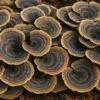
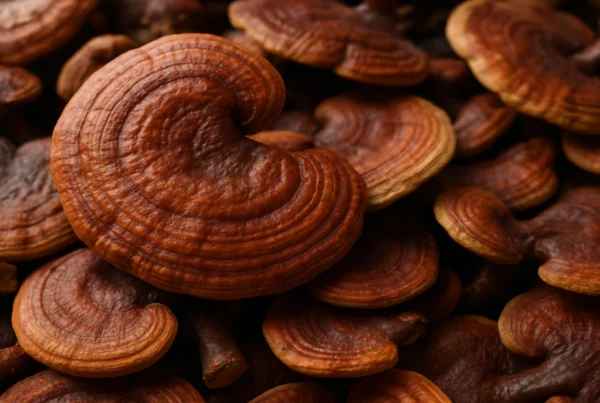
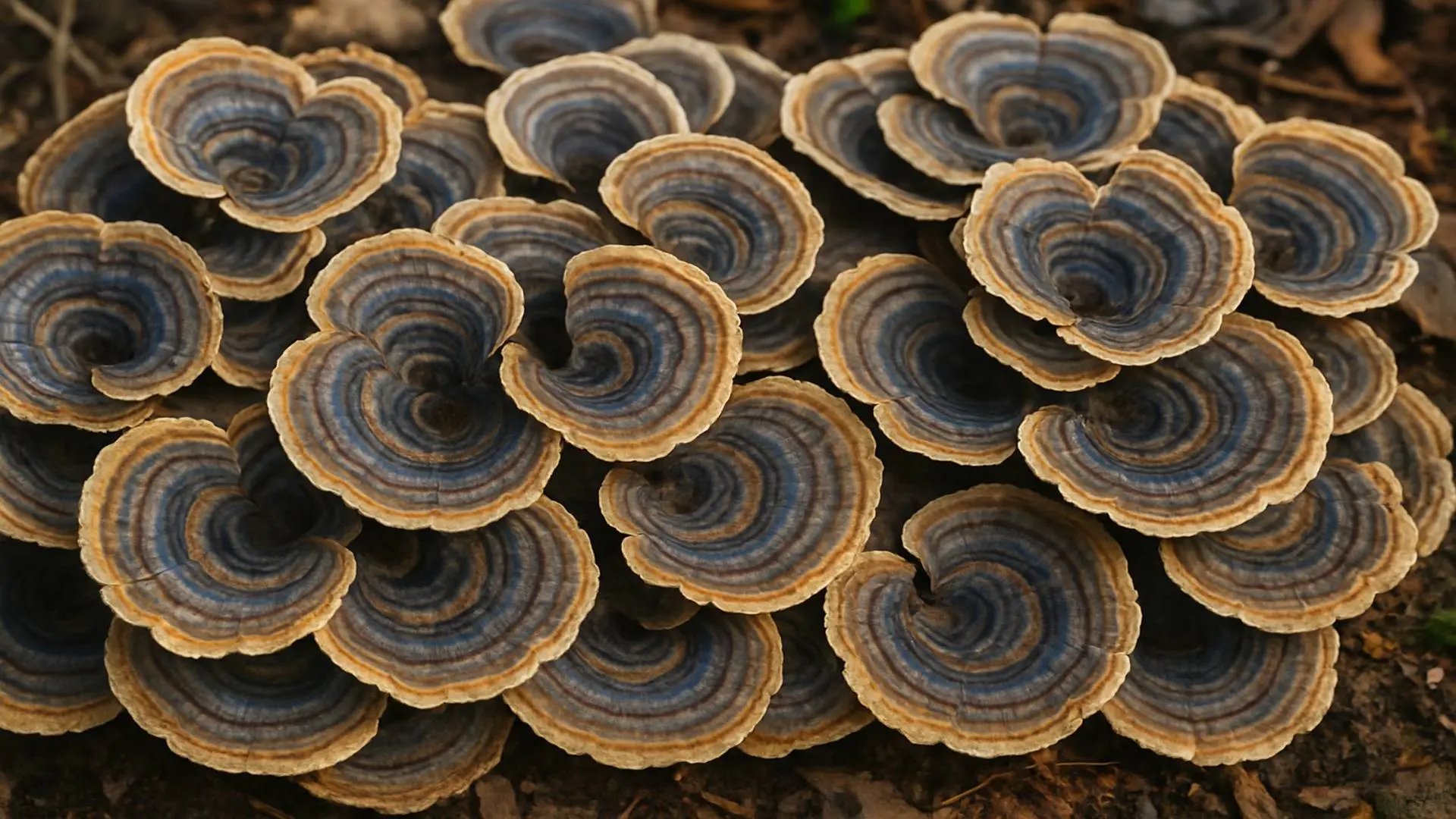
Turkey tail owes its name to its thin, fan-shaped caps with bands in brown, gray, blue and rust tones that resemble the tail of a wild turkey. It is one of the most common mushrooms in the world and grows on dead hardwood in almost every forest. In traditional Chinese medicine it is known as yun zhi and has long been used to strengthen the body and support the lungs and liver.
What makes it special is that two extracts made from turkey tail – PSK and PSP – are among the most clinically studied mushroom compounds. PSK has been approved in Japan for decades as a complementary treatment for certain cancers.
Nutritional profile (per 100 g, dried)
| Nutrient | Amount |
|---|---|
| Polysaccharides (β-glucans) | 45 g |
| Protein | 12 g |
| Dietary fiber | 32 g |
| Vitamin D | 8.9 µg |
| Potassium | 420 mg |
| Selenium | 32 µg |
| Zinc | 5.4 mg |
| Copper | 0.6 mg |
These are approximate values. Since turkey tail is taken in gram quantities, the polysaccharides matter far more than the minerals.
Health benefits
The best-studied effects of turkey tail are:
- Immune modulation
PSK and PSP activate immune cells such as NK cells and T cells. This is well documented in laboratory and clinical studies. - Complementary cancer treatment
In Japan, PSK is used alongside surgery and chemotherapy, mainly for stomach and colorectal cancer. Meta-analyses of Japanese studies found improved survival rates in these patients. A small US study in women with breast cancer showed improved immune function after radiotherapy. Turkey tail does not replace cancer treatment. - Gut health
In a small study in healthy people, PSP acted as a prebiotic and changed the composition of the gut microbiome in a favorable way. - Antioxidant and anti-inflammatory effects
Mainly shown in laboratory studies. - Antiviral effects
Being investigated, for example in HPV infections; the data is still preliminary.
There is no evidence that turkey tail helps with ADHD, diabetes, insulin resistance or leaky gut. In these areas there are at most laboratory data.
In the kitchen
Turkey tail is not an edible mushroom in the usual sense – it is thin, tough and leathery. It is used:
- as tea or broth (simmer for at least 30–60 minutes),
- as powder in smoothies or capsules,
- in mushroom blends with reishi or chaga, for example.
In traditional medicine
- Used in traditional Chinese medicine and Japanese Kampo to strengthen the body
- Traditionally considered a qi tonic and used for the lungs, liver and spleen
- Often used after illness to regain strength
In cosmetics and skincare
- Turkey tail extracts appear in some skincare products because of their antioxidant properties
- Research on effects on the skin is still in its infancy
In gardening and ecology
- As a wood-decaying fungus, turkey tail breaks down dead wood and returns nutrients to the soil
- It can easily be grown on hardwood logs and is popular with home growers and permaculture gardeners
- It is being researched for mycoremediation, the breakdown of pollutants by fungi
Did you know?
PSK (polysaccharide-K, trade name Krestin) was approved in Japan in the 1970s as a complementary cancer medicine and is one of the few mushroom extracts with pharmaceutical status. In Japanese studies, patients with colorectal cancer who took PSK after surgery in addition to chemotherapy lived longer on average than those who did not. These results come mainly from Japan and have not yet been confirmed in large Western studies.
How to use it and daily intake
- Daily dose: usually 2–3 g of powder or extract; in cancer studies, higher doses of standardized PSK or PSP were used
- For tea: simmer 5–7 g in water for at least 45 minutes
- Effects develop over weeks of regular use
Side effects and caution: Turkey tail is generally well tolerated. Digestive upset, dark stools and, rarely, darkened fingernails have been reported. Talk to your doctor before taking it if you have an autoimmune disease or take immunosuppressants, and only use it during chemotherapy in consultation with your treatment team. There is not enough safety data for pregnancy and breastfeeding.
Combinations
- Reishi – also used for the immune system
- Chaga – rich in antioxidants
- Lion’s mane – for the brain and gut
- Ginger – gives teas a warming note
- Astragalus root – a classic in traditional Chinese medicine for the immune system
Recipe:
Turkey tail tea with ginger and lemon balm
Ingredients:
- 5 g dried turkey tail
- 1 tsp dried ginger root
- 1 tsp lemon balm or mint
- 2 cups water
- Optional: honey or lemon
Instructions:
- Add the turkey tail and ginger to boiling water.
- Simmer on low heat for 45–60 minutes.
- Add the herbs for the last 5 minutes.
- Strain, sweeten to taste and drink warm.
The tea tastes mild and slightly earthy – a good warming drink in the colder months.
In summary
Turkey tail is one of the best-studied medicinal mushrooms – especially its extracts PSK and PSP, which are used in Japan and China as a complementary cancer treatment. For everyday use, it is a well-tolerated mushroom that may support the immune system and gut. If you have a serious illness, discuss it with your doctor first.