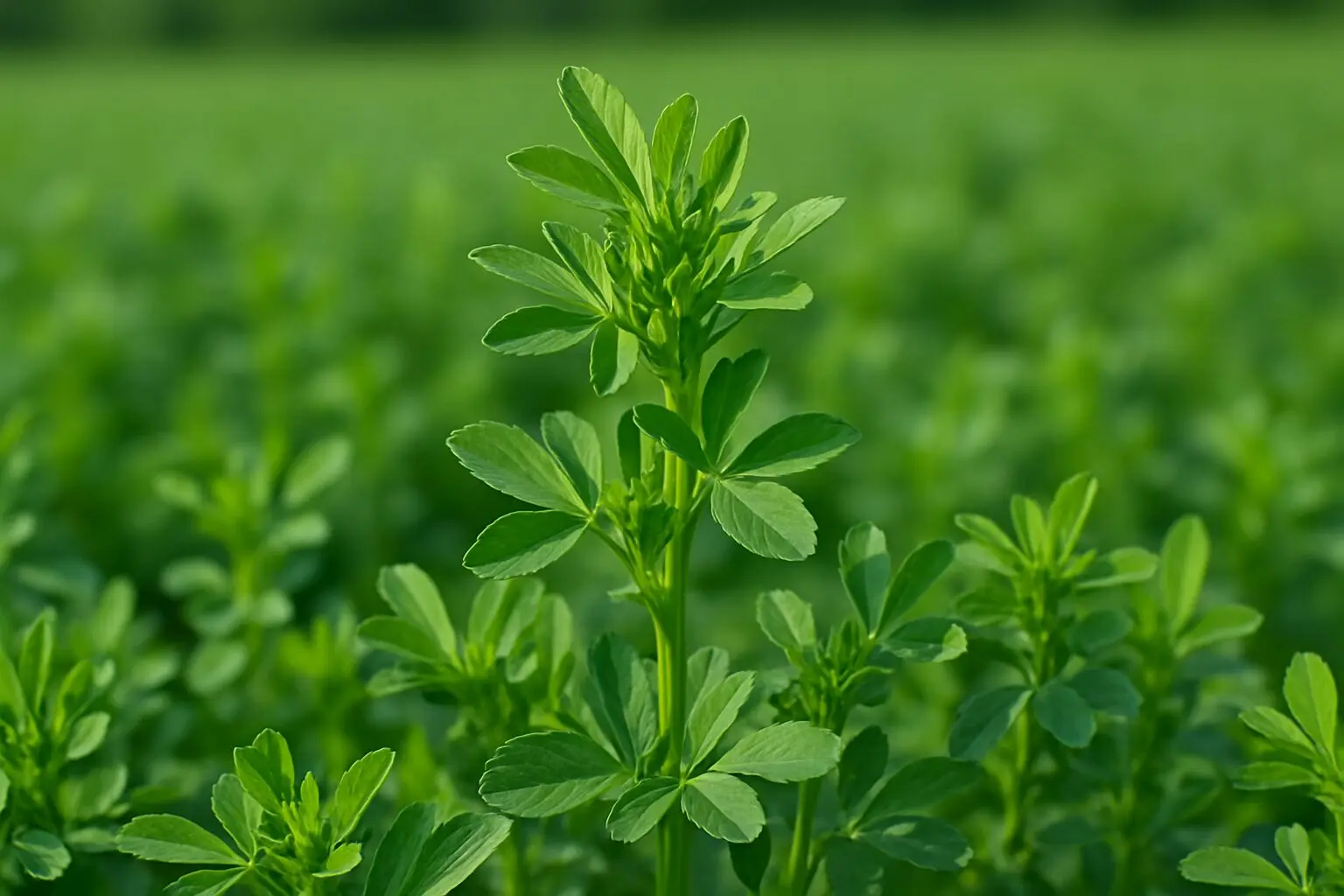
Medicago sativa
Alfalfa, also called lucerne, is best known as a feed crop for livestock. Its young sprouts, however, have become a popular addition to salads and sandwiches, and the dried leaves are used in herbal supplements. Here is what alfalfa offers – and what to watch out for.
What makes alfalfa special?
Alfalfa is a legume, related to peas and clover. Its roots can reach several meters deep, which helps the plant draw up minerals and survive dry periods. The sprouts are low in calories but provide vitamin K, vitamin C, folate, protein and plant compounds such as saponins and phytoestrogens.
Possible health benefits of alfalfa
1. Supports a balanced diet
Alfalfa sprouts add fresh, crunchy greens with very few calories. Claims that alfalfa “alkalizes” or “cleans the blood” are not supported by evidence – the body regulates its pH very tightly by itself – but sprouts are a useful way to add more plant foods to your meals.
2. May ease menopausal symptoms
Alfalfa contains phytoestrogens, plant compounds with a weak estrogen-like effect. Traditionally it has been used for hot flashes and night sweats, and small studies on alfalfa-containing preparations show some benefit. The evidence is limited, and phytoestrogens are not suitable for women with hormone-sensitive conditions.
3. Nutrients for bones
Alfalfa provides vitamin K, calcium and magnesium, all of which are involved in bone health. The amounts in a portion of sprouts are modest, so alfalfa complements rather than replaces other sources.
4. May support cholesterol levels
Saponins in alfalfa can bind cholesterol in the gut. Animal and early human studies suggest a cholesterol-lowering effect, mainly from alfalfa seeds and supplements rather than sprouts.
Nutritional value of alfalfa sprouts (per 100 g)
| Nutrient | Amount |
|---|---|
| Calories | 23 kcal |
| Protein | 4.0 g |
| Fat | 0.7 g |
| Carbohydrates | 2.1 g |
| Fiber | 1.9 g |
| Calcium | 32 mg |
| Magnesium | 27 mg |
| Iron | 1.0 mg |
| Vitamin C | 8.2 mg |
| Vitamin K | 30.5 µg |
Safety: what to know before eating alfalfa
- Raw sprouts carry a risk of food poisoning. The warm, humid conditions used to grow sprouts also suit bacteria such as Salmonella and E. coli. Pregnant women, young children, older people and anyone with a weakened immune system should avoid raw sprouts or cook them.
- Autoimmune conditions. Alfalfa seeds and sprouts contain L-canavanine, an amino acid that has been linked to flare-ups of lupus. People with lupus or other autoimmune diseases should avoid alfalfa.
- Blood thinners. Because of its vitamin K content, alfalfa can interfere with warfarin and similar medicines.
Alfalfa myths, checked
“Isn’t alfalfa just animal feed?”
The mature plant is, but the sprouts are a different matter: tender, easy to eat and mild in flavor.
“Sprouts have no taste.”
Alfalfa sprouts have a mild, slightly nutty taste that works well in sandwiches, salads and wraps.
Worth knowing
- A long history. Alfalfa has been cultivated for thousands of years, starting in the region of present-day Iran.
- The name is usually traced back to an Arabic or Persian word for “best fodder”, reflecting its value for horses and cattle.
How to use alfalfa sprouts
- On sandwiches and wraps – for freshness and crunch.
- In salads and bowls – together with kale, pumpkin and lentils.
- Stirred into hummus or guacamole – just before serving.
Buy sprouts from a reliable source, keep them refrigerated and eat them within a few days.
Summary
Alfalfa sprouts are a light, mild addition to a varied diet, with vitamin K, folate and plant compounds that may help with cholesterol and menopausal symptoms. The evidence is still modest, and raw sprouts are not safe for everyone – but enjoyed with care, they are an easy way to add more green to your plate.