Why this common virus is worth understanding
The Epstein-Barr virus (EBV) is one of the most widespread viruses in the world. Most people never notice it – but in some, it causes glandular fever, and research increasingly links it to other conditions, most clearly multiple sclerosis. This article summarizes what is known and what is still uncertain. It is not a substitute for medical advice.
What is the Epstein-Barr virus (EBV)?
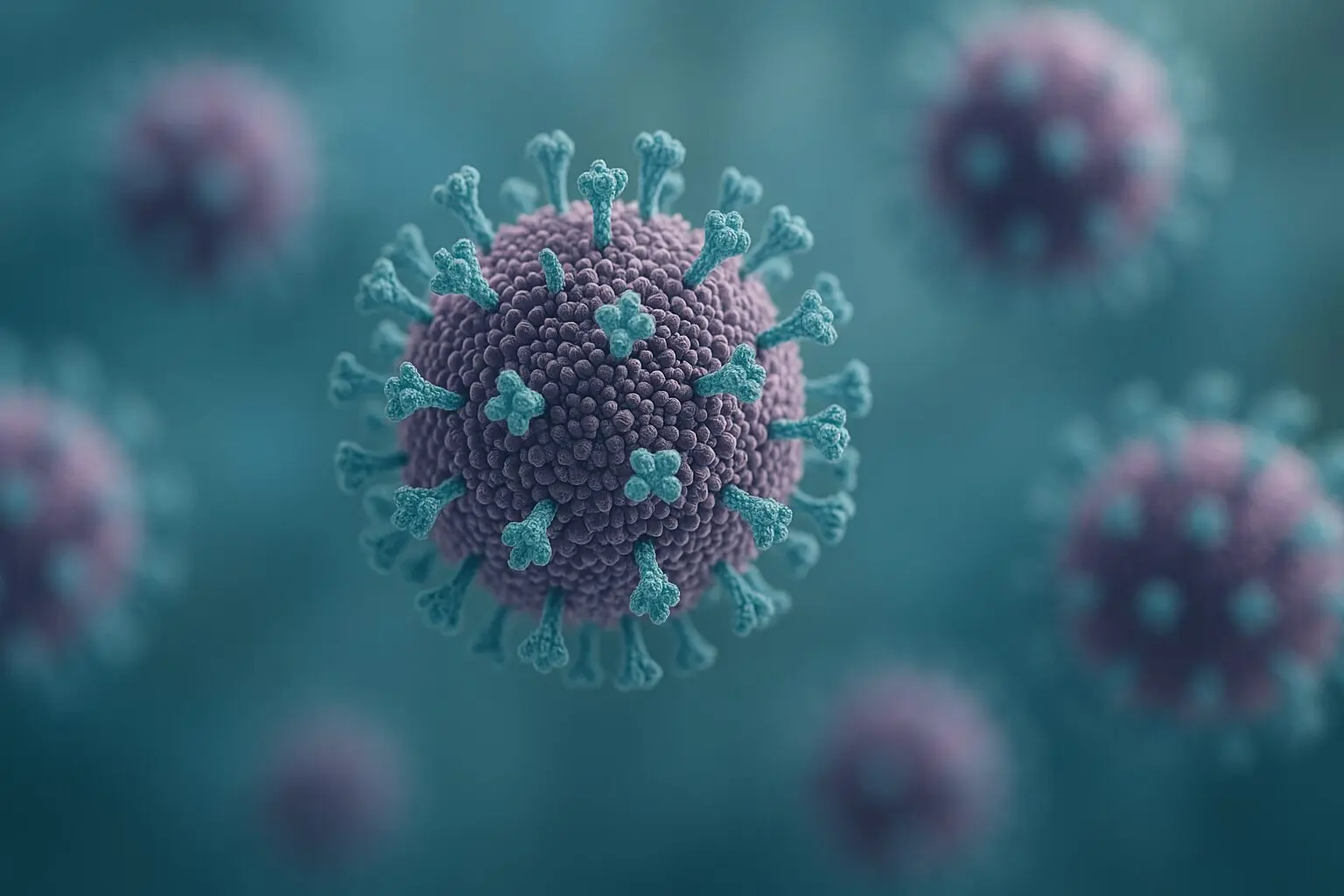
EBV belongs to the herpesvirus family. An estimated 90–95% of adults worldwide carry it. After the first infection, the virus remains in the body for life in a dormant state, mainly in certain white blood cells (B lymphocytes). Like other herpesviruses, it can occasionally become active again – usually without symptoms.
EBV is transmitted mainly through saliva. In teenagers and young adults, the first infection often causes infectious mononucleosis (“mono” or glandular fever), sometimes called the “kissing disease”.
Why it’s worth knowing about EBV
1. It’s not just glandular fever – it is linked to several diseases
In addition to mononucleosis, EBV is associated with:
- multiple sclerosis (MS) – a large study of US soldiers published in 2022 found that MS almost only developed after EBV infection; the risk rose about 32-fold afterwards. EBV is now considered a major cause of MS, although most people with EBV never develop MS
- certain cancers, such as Burkitt’s lymphoma, Hodgkin’s lymphoma and nasopharyngeal carcinoma – these are rare
- other autoimmune diseases such as lupus and possibly rheumatoid arthritis – the evidence is weaker here
- chronic fatigue syndrome (ME/CFS) – in some people, ME/CFS begins after glandular fever; the role of the virus is still being researched
Links with Hashimoto’s thyroiditis, Alzheimer’s and Parkinson’s are being investigated, but are not proven.
2. It can become active again
EBV can reactivate, for example when the immune system is weakened. In healthy people, this usually goes unnoticed. Whether EBV reactivation causes ongoing symptoms such as tiredness, brain fog, muscle pain or mood swings in otherwise healthy people is controversial.
A rare but serious condition is chronic active EBV infection, which causes persistent fever, swollen lymph nodes and an enlarged liver and spleen and requires specialist treatment.
3. You may have it without ever knowing
In young children in particular, the first infection is often mild or completely unnoticed. Most adults have antibodies against EBV without ever having had glandular fever.
4. A healthy lifestyle supports your immune system
There is no cure for EBV, and in most people none is needed – the immune system keeps it under control. You can support your immune system with:
- enough sleep and rest,
- a varied diet rich in vegetables, fruit, whole grains and omega-3 fatty acids,
- regular exercise,
- stress management,
- not smoking, and enough vitamin D – both are also important for reducing MS risk.
After glandular fever, take it slowly: rest, avoid contact sports for several weeks because of the risk of a ruptured spleen, and avoid alcohol while the liver is affected.
5. If you have unexplained symptoms, look at the bigger picture
Persistent tiredness, concentration problems or other unexplained symptoms have many possible causes – including iron deficiency, thyroid problems, depression, sleep disorders and long COVID. EBV antibodies can show whether you have had a past or recent infection, but they are difficult to interpret. Talk to your doctor about which tests make sense.
How EBV test results are interpreted
| Antibody | What It Indicates |
|---|---|
| VCA IgM | Recent (acute) infection |
| VCA IgG | Past infection (very common) |
| EBNA IgG | Long-term immune memory |
| EA IgG | Possible reactivation or chronic activity |
Typical patterns: VCA IgM positive and EBNA IgG negative suggests a recent infection; VCA IgG and EBNA IgG positive suggests a past infection. EA IgG antibodies can remain detectable for years in healthy people, so they alone are not proof of a “reactivation” that is causing symptoms. Results should always be interpreted by a doctor together with your symptoms.
Natural remedies: what is known
Various herbs and nutrients are recommended for EBV in naturopathy. Some have antiviral or immune-modulating effects in laboratory studies, but there are no reliable clinical studies showing that they influence EBV in humans.
| Remedy | Effect |
|---|---|
| Cistus (Cistus incanus) | Antiviral and anti-inflammatory |
| Cat’s Claw (Uncaria tomentosa) | Immune-modulating |
| Lemon Balm (Melissa officinalis) | Calming, mild antiviral |
| Licorice Root | Supports adrenal function and viral control |
| Siberian Ginseng (Eleutherococcus) | Adaptogen, strengthens resistance to stress |
| Quercetin | Reduces inflammation and oxidative stress |
| L-Lysine | May inhibit herpesvirus replication |
The effects listed are based mainly on laboratory studies or traditional use. Important safety notes: licorice root can raise blood pressure and lower potassium and should not be taken for long periods; cat’s claw can interact with many medications and is not suitable during pregnancy or for people with autoimmune diseases. Talk to your doctor before taking supplements, especially if you take medication.
EBV or something else?
| Condition | Similar Symptoms | Key Differences |
|---|---|---|
| Cytomegalovirus (CMV) | Fatigue, malaise | Different lab markers |
| Herpes Simplex Virus | Fatigue, reactivation | Skin lesions are common |
| Long COVID | Brain fog, exhaustion | PCR or antigen testing needed |
| Lyme Disease | Joint pain, fatigue | History of tick exposure, specific antibodies |
| Candida Overgrowth | Brain fog, bloating | Gut symptoms more prominent |
Note: Apart from infections of the mouth, skin or genital area and serious infections in people with weakened immune systems, “Candida overgrowth” as a cause of general symptoms is scientifically controversial. Non-infectious causes such as iron deficiency, thyroid problems or depression should also be considered.
Did you know?
- EBV was discovered in 1964 by Anthony Epstein, Yvonne Barr and Bert Achong in cells from Burkitt’s lymphoma – it was the first virus shown to be linked to a human cancer.
- People who had glandular fever as teenagers or young adults have a higher risk of MS than people infected in early childhood.
- EBV strains differ by region, which may partly explain why nasopharyngeal carcinoma is more common in Southeast Asia.
- Vaccines against EBV are being developed and tested, partly in the hope of preventing MS in the future.
How EBV may affect the body
Brain and nervous system
The link between EBV and multiple sclerosis is the best documented. One theory is “molecular mimicry”: antibodies against an EBV protein also attack a protein in the brain and spinal cord. Links with depression, anxiety and Alzheimer’s have been investigated, but are not proven.
Thyroid
Some studies have found EBV more often in the thyroid tissue of people with Hashimoto’s thyroiditis or Graves’ disease. Whether EBV contributes to these diseases is not yet clear.
Fertility and hormones
There is no reliable evidence that EBV impairs fertility or hormonal balance. Infection during pregnancy is usually harmless for the baby, unlike some other viruses such as CMV.
Gut
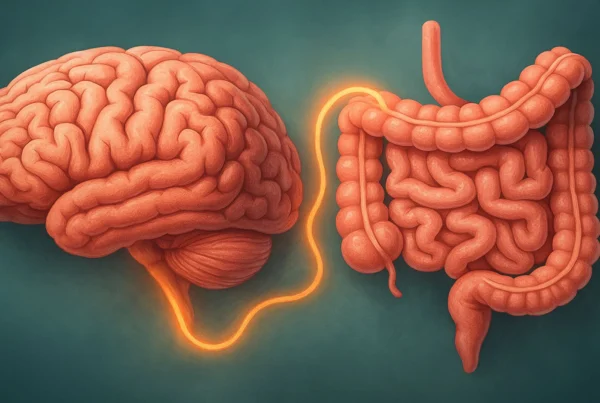
EBV is found in the inflamed gut tissue of some people with inflammatory bowel disease, especially in those taking immunosuppressive medication. A link with irritable bowel syndrome or leaky gut has not been shown.
Final thoughts
The Epstein-Barr virus is a lifelong companion for almost everyone. In most people it causes no problems. Its link with multiple sclerosis and certain cancers shows, however, that it is more than a harmless teenage infection. If you have persistent symptoms, have them investigated broadly by a doctor rather than attributing them to EBV too quickly – and support your immune system with good sleep, a healthy diet, exercise and stress management.