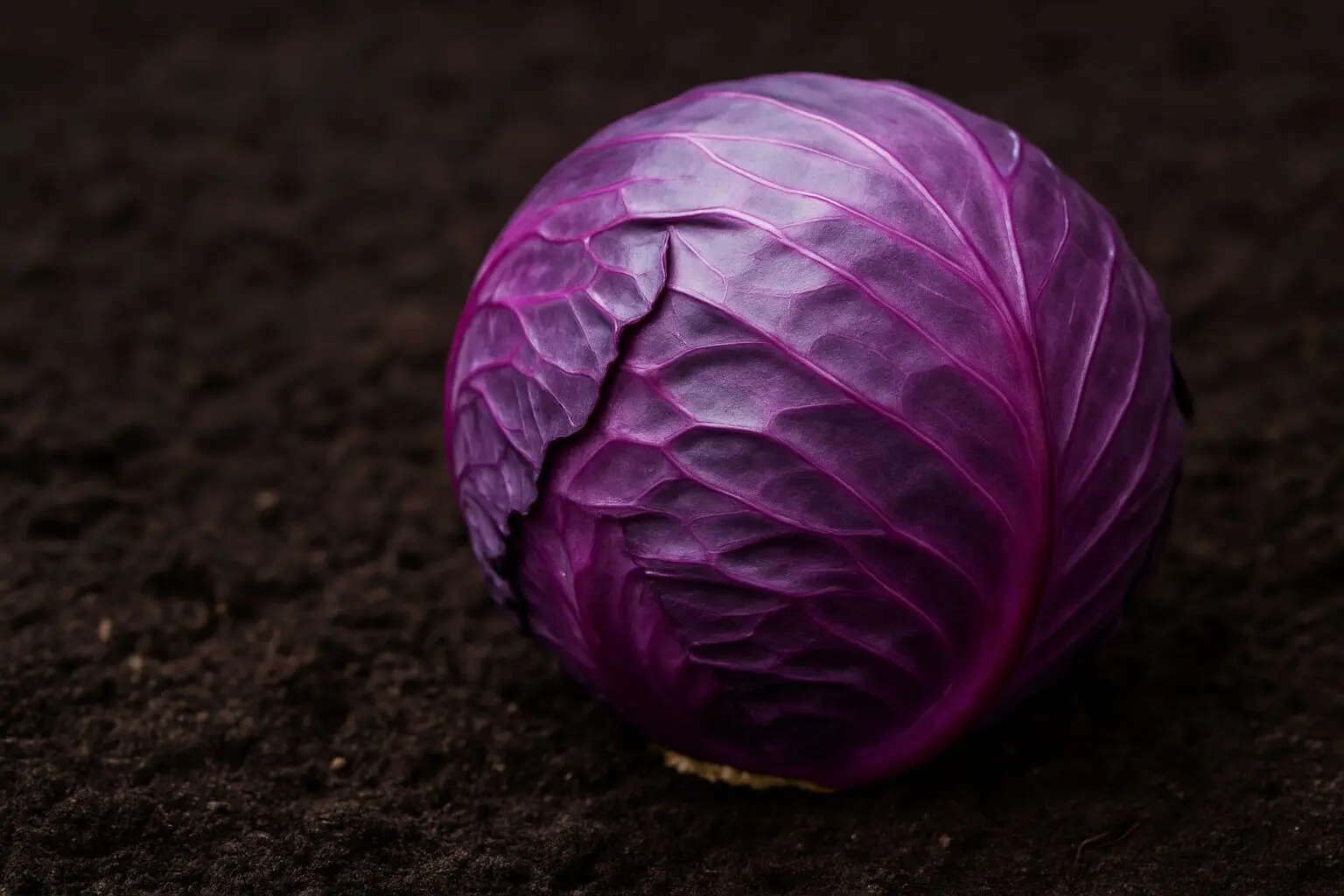
Brassica oleracea var. capitata f. rubra
Red cabbage looks humble on the market stall, yet it is one of the best-value vegetables you can buy. It keeps for weeks, costs very little and offers vitamin C, fiber and a large dose of anthocyanins – the pigments that give it its deep purple color.
What makes red cabbage special?
Anthocyanins are antioxidants that help protect cells from oxidative stress. Red cabbage also provides vitamins C and K, potassium and the sulfur compounds typical of cabbage vegetables. Fermented as sauerkraut, it can also deliver live lactic acid bacteria.
Health benefits of red cabbage
1. Protects your cells
Anthocyanins have antioxidant and anti-inflammatory effects. Diets rich in anthocyanin-containing foods are associated with a lower risk of heart disease and some chronic conditions linked to inflammation.
2. Supports the immune system
With around 57 mg of vitamin C per 100 g, raw red cabbage contains slightly more than an orange. Vitamin C supports immune function and helps the body absorb iron from plant foods.
3. Good for digestion
The fiber in red cabbage supports regular digestion and feeds beneficial gut bacteria. Fermented red cabbage that has not been pasteurized also contains live lactic acid bacteria, which can further support the gut microbiome.
4. Good for the heart and blood pressure
Potassium helps regulate blood pressure, and anthocyanins are linked to healthier, more flexible blood vessels.
Nutritional value of red cabbage (per 100 g, raw)
| Nutrient | Amount |
|---|---|
| Calories | 31 kcal |
| Protein | 1.4 g |
| Fat | 0.2 g |
| Carbohydrates | 7.4 g |
| Fiber | 2.1 g |
| Vitamin C | 57 mg |
| Vitamin K | 38 µg |
| Potassium | 243 mg |
| Anthocyanins | ~30–40 mg |
Red cabbage myths, checked
“It’s only for festive dinners.”
Braised red cabbage is a holiday classic, but raw red cabbage in salads, slaws and wraps keeps more of its vitamin C and works all year.
“It’s hard to digest and causes bloating.”
Cabbage can cause gas, especially if you are not used to it. Start with small portions, cook it, or try fermented cabbage, which many people find easier to tolerate. Caraway seeds are a traditional addition for good reason.
Worth knowing
- A natural pH indicator. Red cabbage changes color with acidity: it turns redder with vinegar or lemon and bluer in alkaline conditions – which is why recipes often add apple or vinegar.
- Fermented is not always probiotic. Supermarket sauerkraut in jars is usually pasteurized; for live bacteria, choose refrigerated, unpasteurized products or make your own.
How to eat more red cabbage
- Salad with apple, carrot and lemon – crunchy and fresh.
- Fermented as a side dish – tangy and good for the gut.
- Soup with ginger and orange – an unusual but very good combination.
- Leaves as wraps – a colorful, low-carb alternative to tortillas.
Summary
Red cabbage is affordable, widely available and rich in vitamin C, fiber and anthocyanins. It supports your cells, your gut and your heart – raw, cooked or fermented.