
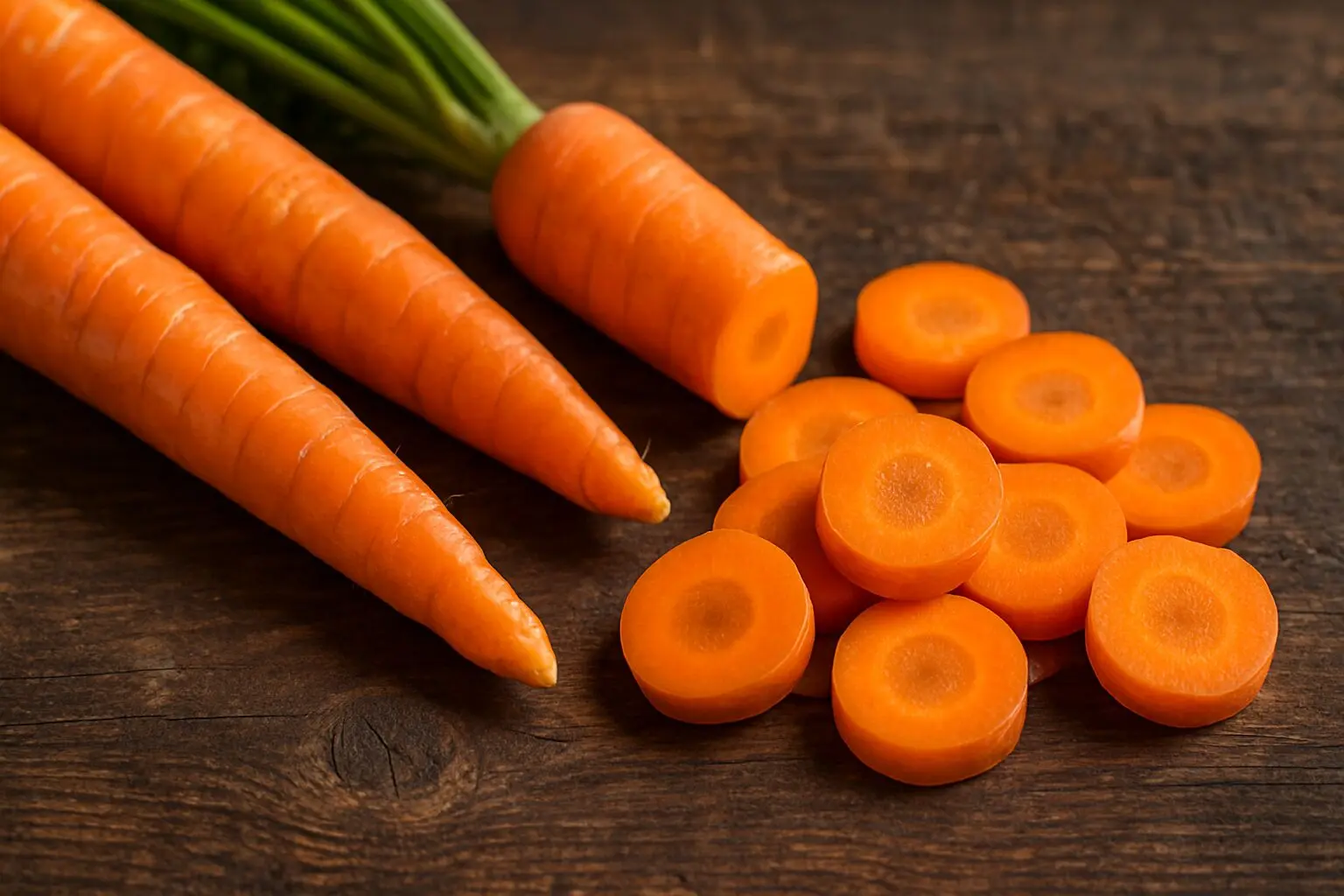
Daucus carota
Carrots are inexpensive, available all year and liked by almost everyone – children included. They are also one of the richest sources of beta-carotene in the everyday diet, which is why they deserve more credit than a side-dish role.
What makes carrots special?
The orange color comes from beta-carotene, which the body converts into vitamin A as needed. Carrots also provide fiber, potassium and vitamin K1, and their natural sweetness makes them an easy snack. You can eat them raw, cooked, roasted or juiced.
Health benefits of carrots
1. Supports vision
Vitamin A is essential for the retina, particularly for seeing in low light. A deficiency leads to night blindness, and carrots are an easy way to prevent it. They will not sharpen already healthy eyesight, but they help keep it that way.
2. Protects the skin
Beta-carotene acts as an antioxidant and builds up in the skin, where it offers a small degree of protection against UV damage (no substitute for sunscreen). Very large amounts can give the skin a harmless yellowish tint, known as carotenemia.
3. Supports the immune system
Vitamin A is needed for healthy mucous membranes and immune cells – the body’s first line of defense. Carrots also add a little vitamin C and other antioxidants.
4. Good for digestion
Carrot fiber, including pectin, supports regular digestion and feeds beneficial gut bacteria. Cooked carrots are gentle on the stomach, which is why carrot soup is a traditional remedy for upset stomachs.
Nutritional value of carrots (per 100 g, raw)
| Nutrient | Amount |
|---|---|
| Calories | 41 kcal |
| Protein | 0.9 g |
| Fat | 0.2 g |
| Carbohydrates | 9.6 g |
| Fiber | 2.8 g |
| Vitamin A (from beta-carotene) | 835 µg |
| Vitamin C | 5.9 mg |
| Vitamin K1 | 13.2 µg |
| Potassium | 320 mg |
| Folate | 19 µg |
Carrot myths, checked
“Carrots improve your eyesight.”
Partly true. They support healthy vision and prevent vitamin A deficiency, but they will not correct short-sightedness. The idea was famously spread by British wartime propaganda to explain the success of their night-fighter pilots, who were really using radar.
“Cooked carrots are more nutritious.”
In one respect, yes: cooking breaks down cell walls and makes beta-carotene easier to absorb, especially with a little fat. Raw carrots keep more vitamin C. Eating both is the best approach.
Worth knowing
- Carrots used to be purple. Early cultivated carrots were purple or yellow; the orange carrot was developed in the Netherlands in the 17th century. That it was bred in honor of the House of Orange is a popular story rather than established fact.
- Naturally sweet. Carrots contain natural sugars, which makes them a good alternative to sweets for snacking.
How to eat more carrots
- Raw as a snack – with hummus or a yogurt dip.
- Carrot and ginger soup – warming and naturally sweet.
- Juice with apple and lemon – a good start to the morning.
- Roasted with herbs and olive oil – the fat helps you absorb the beta-carotene.
Carrots also work in salads, sandwiches, smoothies and even porridge, and they are cheap and easy to find everywhere.
Summary
Carrots are an easy, affordable source of beta-carotene, fiber and potassium. They support your eyes, skin, immune system and digestion – and it does not matter much whether you eat them raw or cooked, as long as you eat them often.