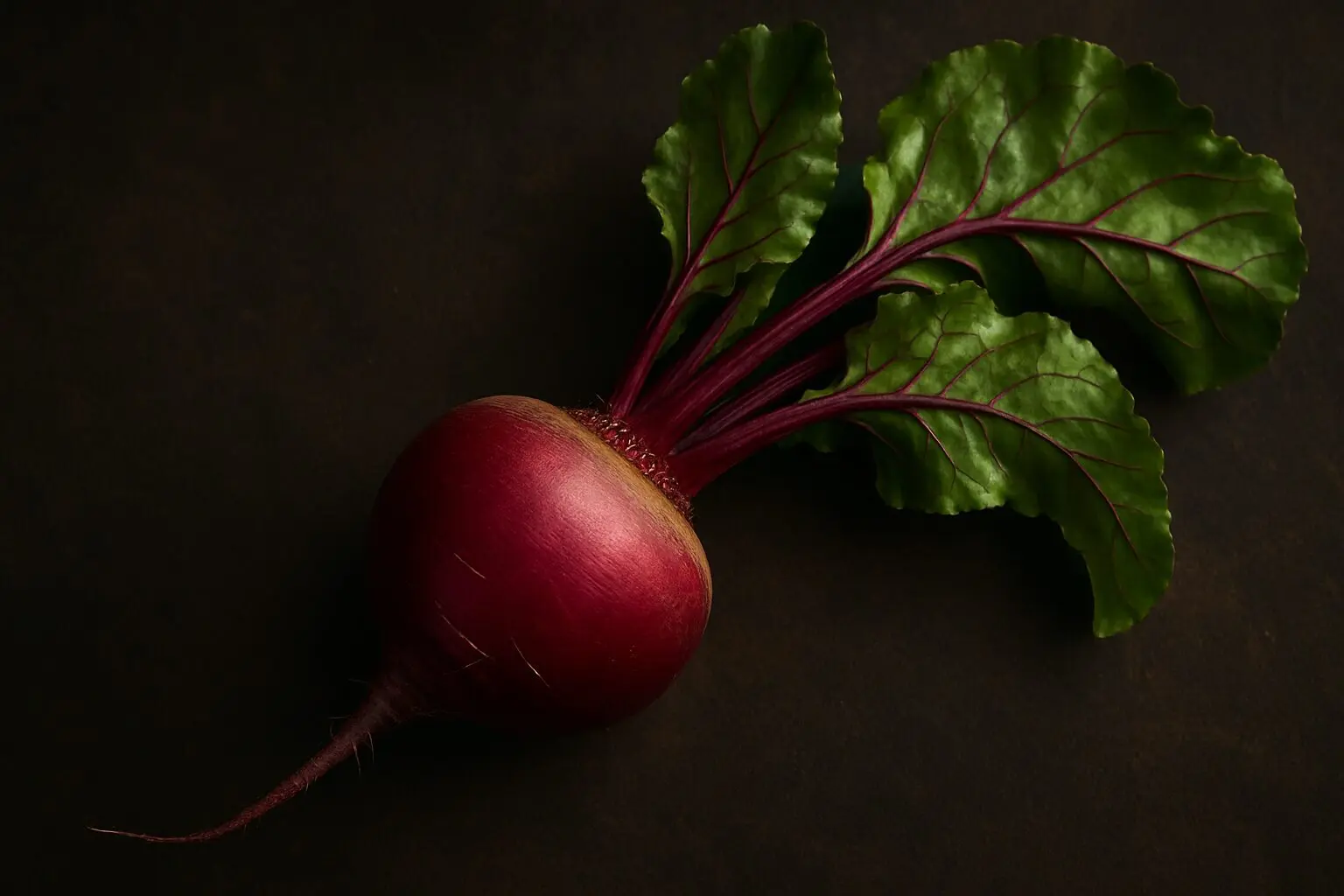
Beta vulgaris
Beetroot is easy to overlook next to more fashionable vegetables, but it has earned its place. It provides folate, potassium and fiber, and its natural nitrates have made beet juice a favorite among endurance athletes.
What makes beetroot special?
Beetroot is much more than an ingredient for borscht. Two groups of compounds set it apart: dietary nitrates, which the body converts to nitric oxide, a molecule that relaxes blood vessels; and betalains, the pigments responsible for its deep color, which have antioxidant properties.
Health benefits of beetroot
1. Supports blood formation
Beetroot is a good source of folate, which the body needs to make red blood cells. Its iron content is modest, so beetroot will not fix iron-deficiency anemia on its own, but it is a useful part of a diet that supports healthy blood.
2. Supports the liver
Beetroot contains betaine, a compound involved in fat metabolism in the liver. Animal studies suggest it may help reduce fat accumulation in the liver; human data are still limited.
3. Better circulation and endurance
The nitrates in beetroot can lower blood pressure slightly and improve the delivery of oxygen to the muscles. Several studies show modest improvements in endurance performance after drinking beet juice two to three hours before exercise.
4. Good for digestion
Beetroot’s fiber helps keep bowel movements regular and feeds a healthy gut microbiome.
Nutritional value of beetroot (per 100 g, cooked)
| Nutrient | Amount |
|---|---|
| Calories | 44 kcal |
| Protein | 1.7 g |
| Fat | 0.2 g |
| Carbohydrates | 9.6 g |
| Fiber | 2.8 g |
| Vitamin C | 4.9 mg |
| Folate | 109 µg |
| Iron | 0.8 mg |
| Magnesium | 23 mg |
| Potassium | 305 mg |
Beetroot facts
“Beetroot improves physical performance.”
There is good evidence for this. The effect is strongest in recreational athletes and in endurance sports such as running and cycling.
“Beetroot turned my urine pink – is that normal?”
Yes. This harmless effect is called beeturia and affects roughly one in ten people. It simply means some of the pigment was not broken down.
Worth knowing
- Leaves first. In ancient Greece and Egypt people mainly ate the leaves; the root was used medicinally.
- Not for everyone in large amounts. Beetroot is high in oxalates, so people prone to kidney stones should not drink large quantities of beet juice every day.
How to eat more beetroot
- As juice or fermented beet kvass – ideally before exercise.
- Grated with horseradish – a traditional, punchy side dish.
- Roasted with goat cheese – a simple dinner that looks like restaurant food.
- As a creamy soup with coconut milk – surprisingly good.
Whether you cook, roast or blend it, beetroot suits anyone who is physically active or simply wants more variety in their vegetables.
Summary
Beetroot is low in calories and rich in folate, potassium, fiber and nitrates. Its best-documented benefits are for blood pressure and endurance, and it is an affordable, versatile vegetable worth eating regularly.