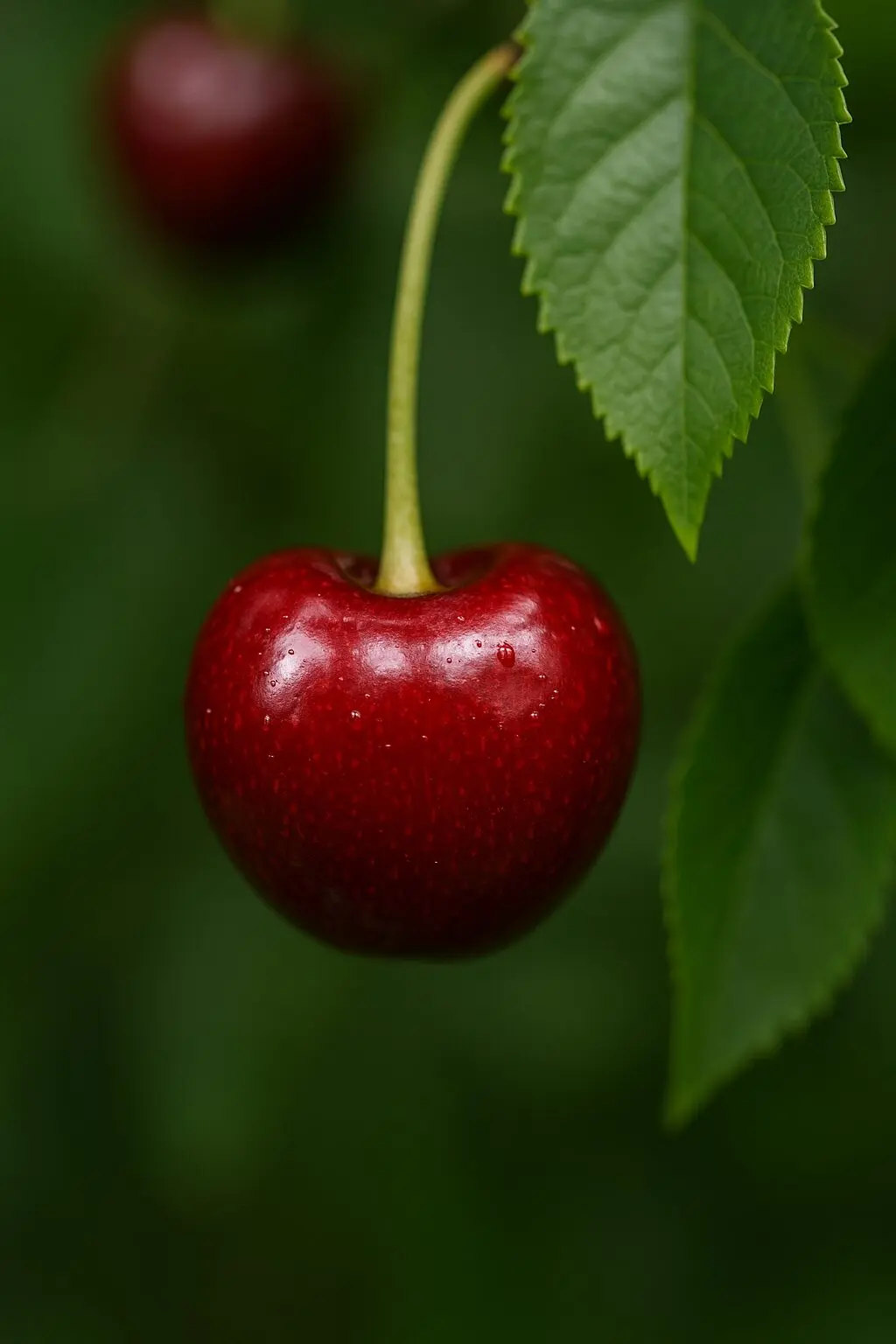
Prunus avium
Sweet cherries are one of the great pleasures of early summer. Like their sour relatives, they contain anthocyanins, other polyphenols and small amounts of melatonin. Studies – mostly with sour cherries, but some with sweet varieties such as Bing – suggest that cherries can reduce inflammatory markers, lower uric acid and possibly support sleep.
Sweet cherries are also versatile: in the kitchen, in skincare and in the garden, where the trees are an important early source of food for bees.
Nutritional values (per 100 g fresh cherries):
| Nutrient | Amount |
|---|---|
| Energy | 63 kcal |
| Carbohydrates | 16 g |
| Fiber | 2.1 g |
| Vitamin C | 7 mg |
| Vitamin A (β-carotene) | 38 µg |
| Vitamin K | 2.1 µg |
| Potassium | 222 mg |
| Anthocyanins | high content |
| Melatonin | naturally present |
| Polyphenols | powerful activity |
Sweet cherries contain somewhat more sugar than sour cherries, but have a moderate glycemic index thanks to their fiber.
Health benefits
- Inflammation – In studies with healthy adults, eating sweet cherries every day for several weeks lowered several inflammatory markers.
- Gout and uric acid – Cherries can lower uric acid levels. In an observational study of people with gout, those who ate cherries had fewer gout attacks.
- Sleep – Cherries contain melatonin and tryptophan. Small studies – mainly with tart cherry juice – found slightly better sleep. The amount of melatonin in cherries is much lower than in supplements.
- Heart and blood vessels – Potassium and polyphenols may help keep blood pressure healthy.
- Exercise and recovery – Studies with cherry juice found less muscle soreness after intense exercise; most of them used sour cherries.
- Blood sugar – Fresh cherries in normal portions are fine for most people with insulin resistance or type 2 diabetes. Dried cherries and juice contain much more sugar.
- Skin – Vitamin C and polyphenols protect cells; vitamin C is needed for collagen formation.
There is no evidence that cherries help with ADHD, leaky gut or chronic fatigue.
Uses
In the kitchen
Cherries are perfect:
- as a base for compotes, sauces and homemade ice cream,
- in smoothies with almonds and kefir,
- on cakes, in clafoutis or on granola,
- dried or frozen – they retain most of their nutrients when frozen.
In herbal medicine
- Cherry stems – traditionally used as a mildly diuretic tea
- Bark – traditionally used for coughs
In cosmetics
- Fresh cherry masks – a traditional home remedy for the skin
- Extracts – in natural skincare products for their antioxidant properties
- Cherry kernel oil – a light, nourishing oil for sensitive skin
In the garden
- Cherry trees blossom early and are an important source of food for bees and other pollinators
- Leaves can be composted
- Cherry trees are attractive house trees and fit well into permaculture gardens
Note: Cherry pits contain amygdalin, which can release cyanide when the kernels are crushed or chewed. Swallowing a pit by accident is harmless, but do not crush or eat the kernels.
Good combinations
- Almonds or hazelnuts – for protein and healthy fats
- Kefir or natural yogurt – for a gut-friendly snack
- Dark chocolate (70%+) – a classic, polyphenol-rich pairing
- Flaxseed – for extra fiber
- Ginger and turmeric – in a warming smoothie
Suggested intake
- Adults: 100–200 g of fresh cherries a day (about one bowl)
- Children: 50–100 g a day
- Cherry stem tea: 1 tbsp dried stems per 250 ml water, steep for 10 minutes
Recipe: cherry and kefir smoothie
Ingredients:
- 1 cup fresh, pitted cherries
- ½ banana
- 1 tbsp ground almonds
- 1 tsp chia seeds
- ¾ cup kefir
- ½ tsp grated fresh ginger
- a few drops of lemon juice
Instructions:
Blend all ingredients until smooth and drink immediately – a good breakfast or post-workout drink.
Did you know…?
- In Japan, the cherry blossom (sakura) is a symbol of beauty and transience. During hanami, people gather under the blossoming trees.
- Cherry pit pillows are a traditional home remedy: warmed in the oven or microwave, they retain heat for a long time and help with tense muscles.
- Cherries ripen early in summer, which is why they are among the first fresh fruits of the season in many countries.
- In some European folklore, a cherry tree near the house was believed to protect it from lightning.
In summary
Sweet cherries are a delicious summer fruit with anti-inflammatory polyphenols and promising evidence for lower uric acid and inflammatory markers. Enjoy them fresh in season, in moderate amounts, as part of a varied diet.