Hypericum perforatum
St. John’s wort is one of the best-researched medicinal plants in Europe. For centuries it has been used for low mood, nervous tension and digestive complaints, and today extracts of it are among the herbal remedies with the strongest evidence for mild to moderate depression. It is also one of the herbs with the most important drug interactions – so it deserves both respect and caution.
What is St. John’s wort?
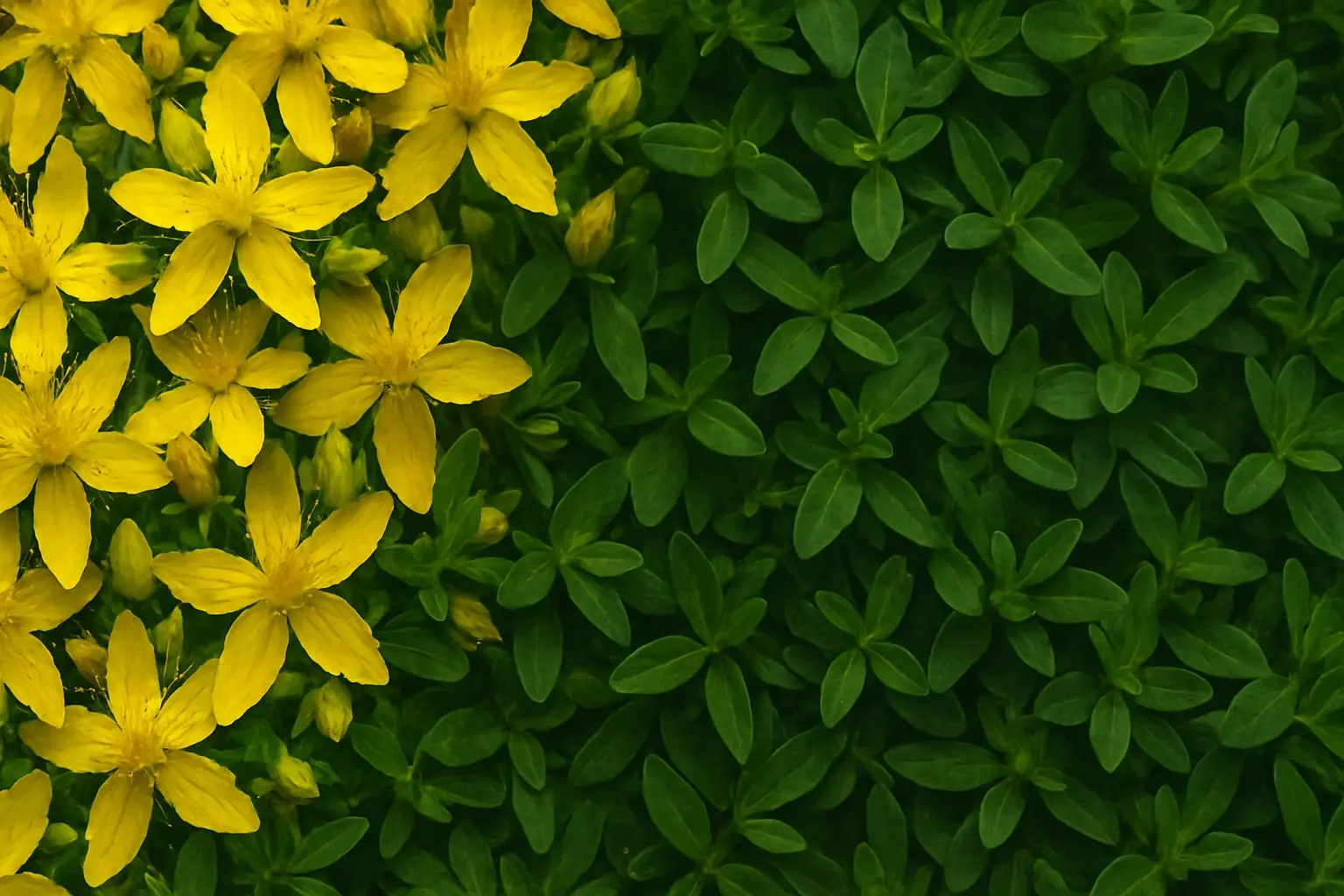
St. John’s wort is a wild plant with bright yellow flowers that bloom around the summer solstice and St. John’s Day (24 June), which gave it its name. Its key active compounds are hyperforin and hypericin. They influence the messengers serotonin, dopamine and noradrenaline in the brain and also have anti-inflammatory effects.
Health benefits of St. John’s wort
1. Mild to moderate depression
Clinical studies show that standardized extracts can be about as effective as conventional antidepressants for mild to moderate depression, with fewer side effects. It takes two to four weeks to work. Depression always belongs in medical care, though: talk to a doctor before using St. John’s wort, and never use it for severe depression or thoughts of suicide.
2. Digestive support
Traditionally, the herb is used for indigestion, bloating and a feeling of fullness, as it stimulates bile flow.
3. Soothes the skin
Applied externally as oil, St. John’s wort is used for minor burns, bruises, irritated skin and muscle tension. Its anti-inflammatory compounds support skin healing.
4. Calm and sleep
By easing nervous tension, St. John’s wort can indirectly improve sleep. It is not a sedative, however, and is not a treatment for insomnia on its own.
How to use it
- Tea from the dried herb – one to two cups a day for mild nervous restlessness.
- St. John’s wort oil – for skin and muscles (avoid sunlight on treated skin).
- Standardized extracts in tablets or capsules – the form used in studies on depression; only after consulting a doctor.
Important: interactions and side effects
St. John’s wort speeds up the breakdown of many medicines in the liver and can make them ineffective. This applies, among others, to:
- hormonal contraceptives (including the pill),
- antidepressants (risk of serotonin syndrome when combined),
- blood thinners such as warfarin,
- HIV medication, immunosuppressants after transplants, and certain heart and cancer drugs.
If you take any medication, ask your doctor or pharmacist before using St. John’s wort. It can also make the skin more sensitive to sunlight, and it is not recommended during pregnancy and breastfeeding.
Worth knowing
- In folk tradition, St. John’s wort was believed to keep away evil spirits and “dark moods”.
- Hold a leaf up to the light and you will see tiny translucent dots – oil glands that gave the plant the name perforatum.
- When the flowers are steeped in oil, it turns deep red because of hypericin.
Summary
St. John’s wort is a well-studied herbal remedy for mild to moderate low mood, digestive complaints and skin care. Its effect is real – which is exactly why it needs to be used carefully and, if you take other medication, only after medical advice.