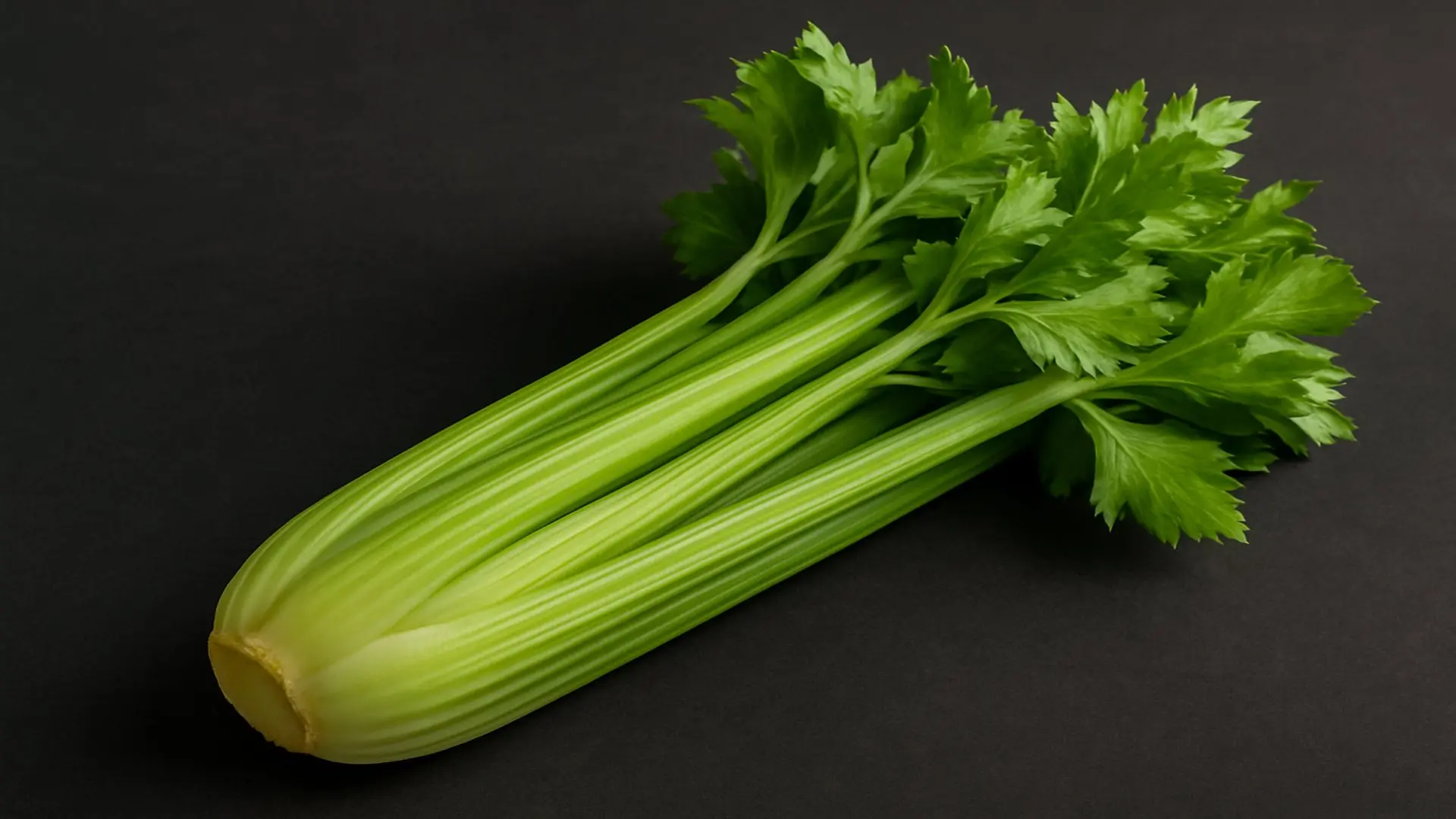
Apium graveolens var. dulce
Celery divides opinion: some love its fresh, slightly salty crunch, others find it bland. Either way, it is one of the lowest-calorie vegetables there is, and it offers more than water and fiber.
What makes celery special?
Celery stalks are about 95% water, which makes them very hydrating and low in calories. They also provide vitamin K, folate, potassium and calcium, as well as plant compounds such as apigenin and phthalides, which are being studied for their anti-inflammatory and blood-pressure-lowering effects.
Health benefits of celery
1. Hydration and a mild diuretic effect
Thanks to its water and potassium content, celery has a mild diuretic effect. Claims that it “flushes out toxins” go too far – that is the job of your liver and kidneys – but celery is a hydrating, low-calorie snack that supports a healthy fluid balance.
2. Supports digestion
Its fiber helps keep bowel movements regular, and some of its compounds may support the flow of bile, which helps digest fat. Celery is also gentle enough for most stomachs.
3. May help lower blood pressure
Phthalides in celery can relax the walls of blood vessels. Small studies suggest regular celery or celery seed extract can lower blood pressure slightly, though more research is needed.
4. Anti-inflammatory compounds
Apigenin and other flavonoids in celery have anti-inflammatory and antioxidant effects in laboratory studies.
Nutritional value of celery (per 100 g)
| Nutrient | Amount |
|---|---|
| Calories | 14 kcal |
| Protein | 0.7 g |
| Fat | 0.2 g |
| Carbohydrates | 3 g |
| Fiber | 1.6 g |
| Vitamin K | 29.3 µg |
| Vitamin C | 3.1 mg |
| Folate | 36 µg |
| Potassium | 260 mg |
| Calcium | 40 mg |
Celery myths, checked
“Celery has negative calories.”
This is a myth. Digesting celery uses a few calories, but not more than it provides. It is, however, so low in calories that it barely counts.
“Celery juice heals the gut.”
Celery juice has become a wellness trend, with claims ranging from detox to curing chronic illness. There is no good evidence for these claims. It is a perfectly healthy drink, but whole celery keeps the fiber that juicing removes.
Worth knowing
- Celery is a common allergen. In the EU it is one of the 14 allergens that must be declared on food labels. Celery allergy can cause severe reactions, so check labels if you are affected.
- An old remedy. Celery and its seeds were used medicinally in ancient Egypt and Greece, long before the stalks became a popular vegetable.
How to eat more celery
- As sticks with hummus or guacamole – a crunchy, filling snack.
- Celery soup with coconut milk and ginger – warming and light.
- Celery, apple and walnut salad – the classic Waldorf combination.
- As a base for soups and stews – together with onion and carrot.
Summary
Celery is a hydrating, very low-calorie vegetable with useful amounts of vitamin K, potassium and folate, plus compounds that may support blood pressure and digestion. Eat it whole rather than relying on juice, and enjoy it as one of many vegetables.