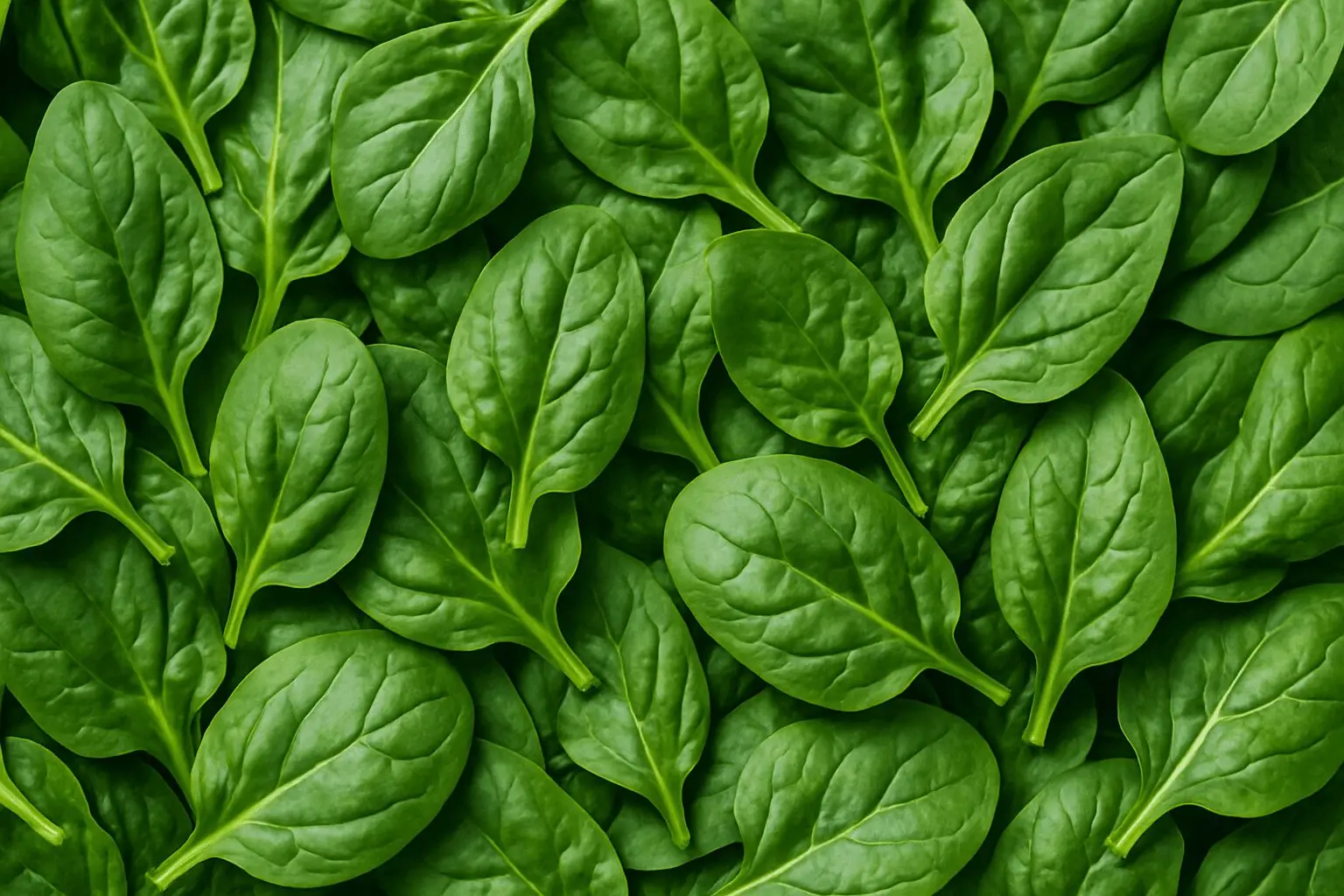
Spinach rarely gets top billing, yet few vegetables pack so much into so few calories. A handful adds vitamin K, folate, magnesium and a range of plant compounds to a meal – and it works in almost anything, from a morning smoothie to a quick pasta sauce.
What makes spinach special?
Spinach is a leafy green from the amaranth family, related to beetroot and chard. Its value lies less in any single “superpower” than in its density: at around 23 kcal per 100 g it supplies a meaningful share of several vitamins and minerals, along with carotenoids such as lutein and beta-carotene. It won’t cure anything on its own, but it is an easy way to make an ordinary meal more nourishing.
Health benefits of spinach
1. Supports eye health
Spinach is one of the richest dietary sources of lutein and zeaxanthin. These pigments accumulate in the macula, the part of the retina responsible for sharp central vision, where they help filter blue light. Diets high in these carotenoids are linked with a lower risk of age-related macular degeneration.
2. Contributes to normal immune function
With about 28 mg of vitamin C per 100 g, raw spinach covers roughly a third of an adult’s daily needs. Vitamin C and the beta-carotene in spinach (which the body converts to vitamin A) both play a role in a well-functioning immune system. Cooking reduces the vitamin C content, so a mix of raw and lightly cooked spinach is a good approach.
3. Iron, folate and energy
Spinach provides iron and folate, both of which are needed to form healthy red blood cells that carry oxygen around the body. Low levels of either can leave you feeling tired. Keep in mind that the iron in spinach is non-heme iron, which the body absorbs less efficiently than iron from meat – more on that below.
4. Supports the body’s own detoxification
There is no need for special detox drinks: your liver and kidneys handle detoxification. Spinach can support them indirectly, as it delivers fiber, potassium and antioxidants that are part of a diet these organs thrive on. Claims that the chlorophyll in spinach “cleanses” the body are not well supported by research.
Nutritional value of spinach (per 100 g, raw)
| Nutrient | Amount |
|---|---|
| Calories | 23 kcal |
| Protein | 2.9 g |
| Fat | 0.4 g |
| Carbohydrates | 3.6 g |
| Fiber | 2.2 g |
| Vitamin A | 469 µg |
| Vitamin C | 28.1 mg |
| Vitamin K | 483 µg |
| Folate | 194 µg |
| Iron | 2.7 mg |
| Magnesium | 79 mg |
| Potassium | 558 mg |
Spinach myths, checked
“Spinach is the best source of iron.”
Spinach contains a fair amount of iron, but not an exceptional amount, and its non-heme iron is only partly absorbed. You can improve absorption by pairing it with vitamin C – tomatoes, peppers or a squeeze of lemon – and by not drinking tea or coffee with the meal.
“You can eat spinach with every meal.”
Spinach is high in oxalates, which bind calcium and reduce how much of it you absorb. For most people this is not a problem, but if you are prone to kidney stones it makes sense to vary your greens and not eat large amounts of spinach every day. Boiling and draining spinach lowers its oxalate content. People taking blood thinners such as warfarin should keep their vitamin K intake consistent and talk to their doctor before making big changes.
A few facts worth knowing
- An old remedy. Spinach reached Europe via Persia and Spain in the Middle Ages and was used both as food and as a mild medicinal plant.
- The Popeye effect. The cartoon made spinach famous for strength. The muscles were fiction, but the vegetable’s nutrient profile is real.
How to eat more spinach
- In a smoothie. Blend a handful of baby spinach with banana, berries and yogurt; the fruit masks the taste almost completely.
- On toast. Wilt spinach in a pan with a little olive oil and garlic and pile it onto avocado toast or eggs.
Because it is low in calories and adds volume and fiber, spinach is also useful if you are trying to manage your weight. Stir it into scrambled eggs, soups, sauces or sandwiches – it wilts down to almost nothing and fits into most dishes.
Summary
Spinach is an inexpensive, versatile way to add vitamin K, folate, magnesium, iron and protective carotenoids to your diet. Eat it raw and cooked, combine it with vitamin C to make the most of its iron, and vary it with other greens if you eat a lot of it.