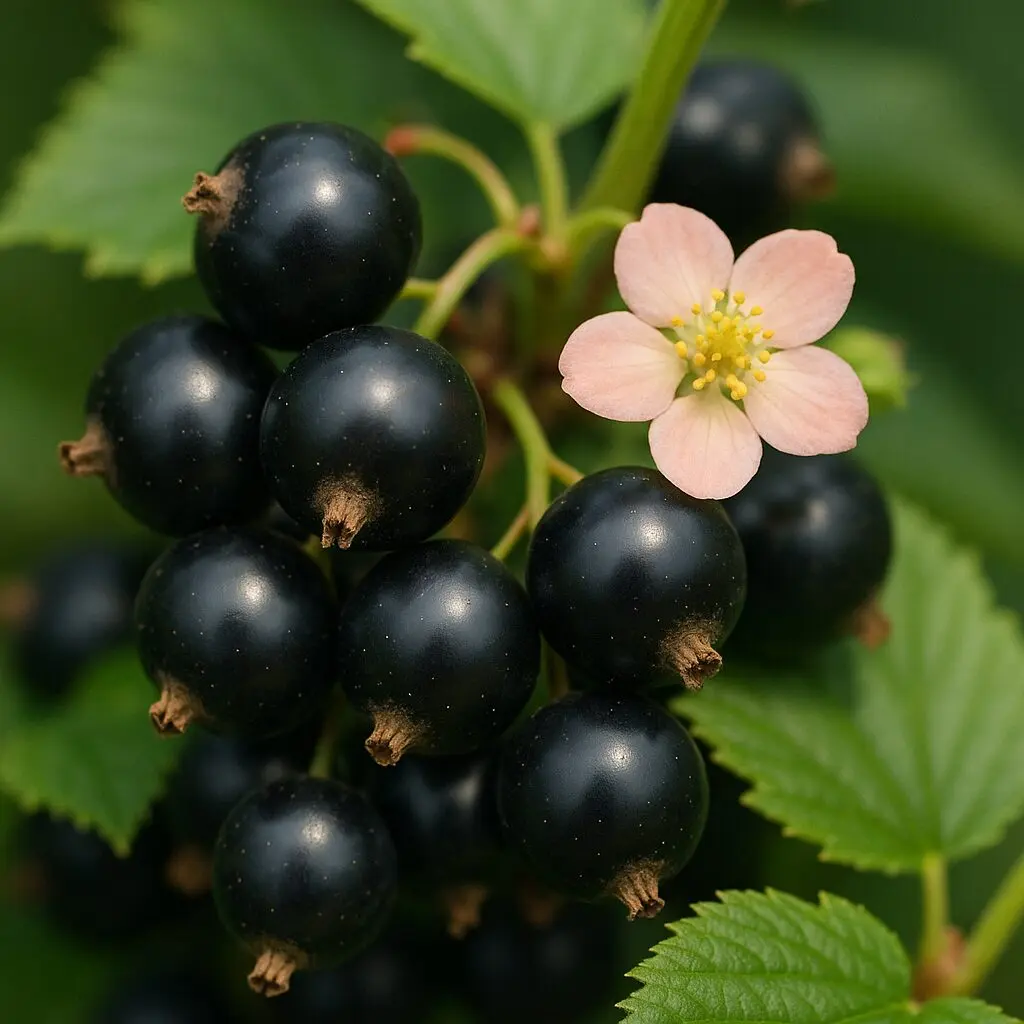
Ribes nigrum
A small, sour berry with a lot of vitamin C and anthocyanins
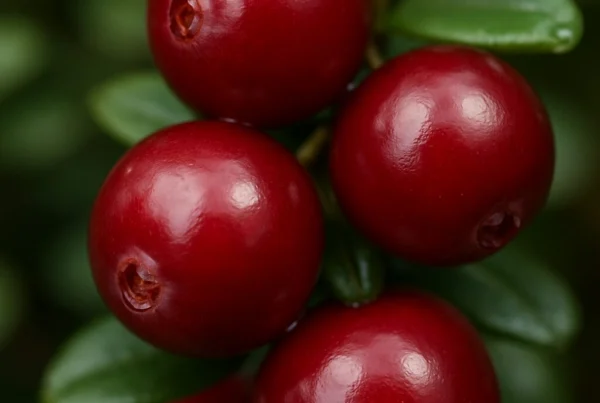
Blackcurrants are among the most nutritious berries you can grow in your garden. Fresh blackcurrants contain around 180 mg of vitamin C per 100 g – about three to four times as much as lemons. They are also rich in anthocyanins, the dark pigments that give them their color, and their seeds provide an oil with gamma-linolenic acid (GLA).
Their intense, sour-tart taste makes them less suitable for snacking than other berries, but perfect for juices, jams, sauces and smoothies.
Nutritional values (per 100 g dried blackcurrants)
| Nutrient | Amount |
|---|---|
| Fiber | 17 g |
| Vitamin C | 280–300 mg |
| Vitamin A | 4 µg |
| Vitamin E | 1.2 mg |
| Vitamin K | 27 µg |
| Potassium | 370 mg |
| Iron | 2.6 mg |
| Anthocyanins | 500–800 mg |
| Total flavonoids | 1500–2500 mg |
| Gamma-linolenic acid (GLA) | present in seeds |
What can blackcurrants do for your health?
- Immune system – With their very high vitamin C content, a small portion covers your daily needs. Vitamin C contributes to normal immune function.
- Blood sugar – In small studies, blackcurrants eaten with a sugary meal softened the rise in blood sugar and insulin. Their fiber and low sugar content make them a good fruit for people with insulin resistance or type 2 diabetes.
- Blood vessels – Anthocyanins may improve blood vessel function and circulation; diets rich in anthocyanins are associated with lower blood pressure.
- Exercise and recovery – Some studies with blackcurrant extract found slightly better endurance performance and recovery.
- Eyes – Japanese studies suggest that blackcurrant anthocyanins may reduce eye strain from screen work.
- Skin – Vitamin C is needed for collagen formation; the seed oil is used for dry and irritated skin.
- Gut – Fiber and polyphenols feed beneficial gut bacteria.
There is no evidence that blackcurrants help with ADHD or leaky gut or that they “detox” the liver. The neuroprotective effects described in the literature come from laboratory and animal studies.
Traditional medicine and herbal uses
- Blackcurrant leaves are traditionally used as tea for their mild diuretic and anti-inflammatory effects, for example for rheumatic complaints and gout
- Fruits – dried, as juice or powder – are traditionally used for colds and to strengthen blood vessels
- Seed oil contains GLA and is used for dry, inflammatory skin conditions such as eczema; the evidence from studies is mixed
Culinary uses
Blackcurrants’ intense, tangy flavor is perfect for:
- smoothies with yogurt or kefir,
- jams, fruit purées and jellies – combined with sweeter fruits, they need less sugar,
- topping oatmeal, granola or pancakes,
- sauces for game or duck,
- fruit teas with orange peel or ginger,
- powders for baking and desserts.
Cosmetic uses
- Blackcurrant seed oil nourishes dry and stressed skin
- It is suitable for dry or sensitive skin; test it on a small area first if you have atopic skin
- Antioxidants protect the skin from oxidative stress
- Extracts from the leaves are used in toners
Good combinations
- With raspberries or aronia – a mix of different polyphenols
- With cocoa – a delicious, polyphenol-rich combination
- With ginger and turmeric – in a warming tea or smoothie
- With oats – the vitamin C improves the absorption of iron from oats
Suggested amounts
- Children: 1–2 teaspoons of dried berries a day
- Adults: 1–2 tablespoons of dried berries or a handful of fresh ones a day
- Leaf tea: 1 teaspoon of dried leaves per cup of boiling water, steep for 10 minutes
- Seed oil: 0.5–1 teaspoon a day, or apply directly to the skin
Storage tips
- Dried fruit: keep in an airtight container, cool, dry and away from light
- Seed oil: store in the fridge, protected from light
- Powder: store in a dry, sealed glass jar
- Fresh berries freeze very well
Did you know…?
Fresh blackcurrants contain about three to four times as much vitamin C as lemons.
During the Second World War, blackcurrant cultivation was promoted in Britain because the berries were a valuable source of vitamin C when citrus fruits were scarce – the origin of the popular blackcurrant drinks there.
In France, blackcurrants are the base of the famous liqueur crème de cassis. For your health, a smoothie with flaxseed and blackcurrants is the better choice.
In summary
Blackcurrants are one of the richest natural sources of vitamin C and full of anthocyanins. Fresh, frozen, as juice or powder, they are a simple way to boost your vitamin C intake and add color to your diet.