Rubus idaeus
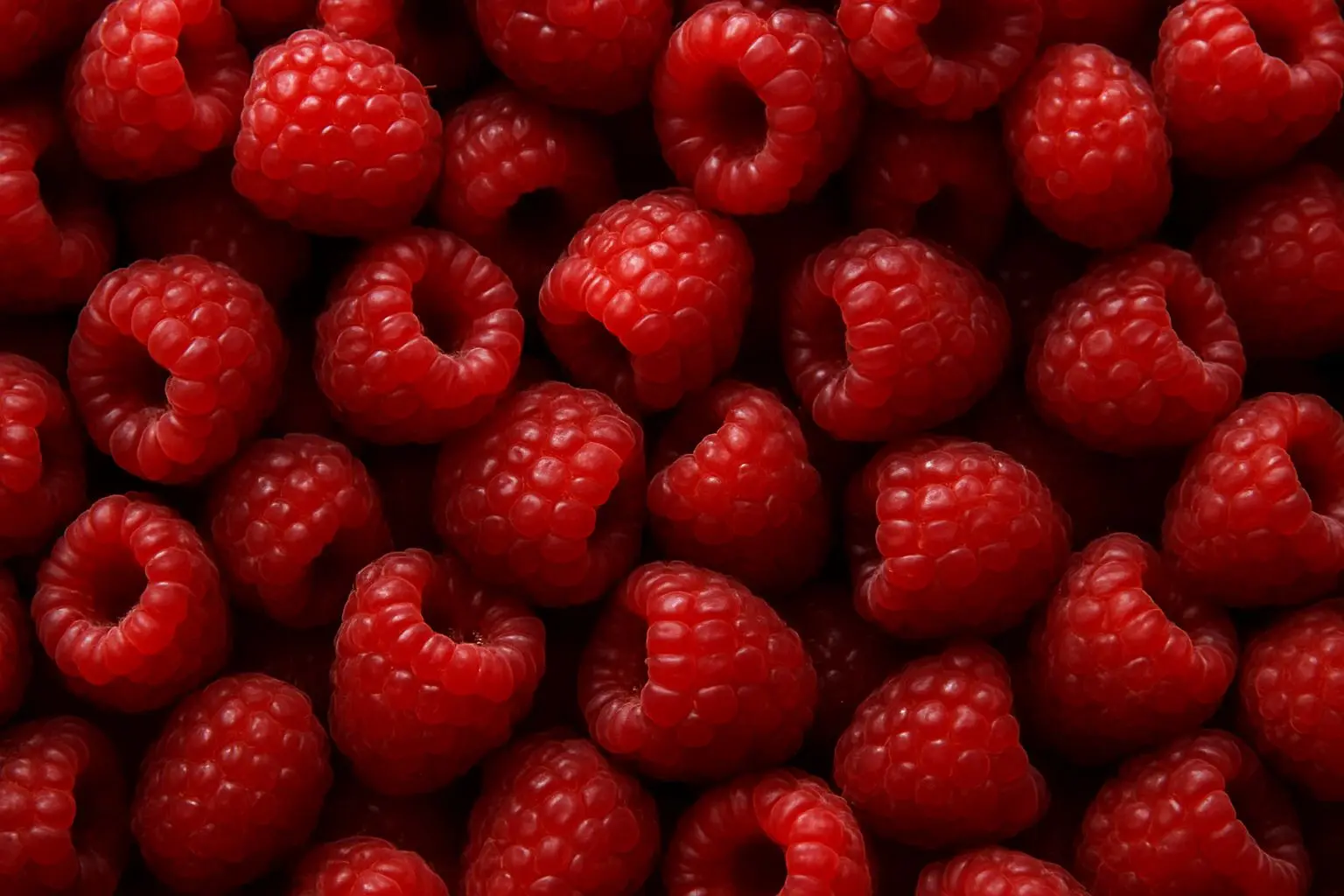
Raspberries make any breakfast or dessert look special, but they are more than decoration. Few fruits combine so much fiber with so little sugar, and their red color comes from antioxidants that researchers are studying with growing interest.
What makes raspberries special?
Raspberries are naturally low in sugar and high in fiber and vitamin C – an unusual combination for a fruit. Their color comes from anthocyanins, and they also contain ellagic acid and quercetin, compounds with antioxidant and anti-inflammatory effects.
Health benefits of raspberries
1. Rich in antioxidants
Quercetin, ellagic acid and anthocyanins help counter oxidative stress and inflammation, which are involved in many chronic diseases.
2. High in fiber, low in sugar
100 g of raspberries contain 6.5 g of fiber and only 4.4 g of sugar. This combination supports steady blood sugar, healthy digestion and weight management.
3. Good for heart and brain
The polyphenols in raspberries may support healthy blood vessels and cholesterol levels. Studies on berries in general also suggest benefits for memory and cognitive function as we age.
4. Supports the skin
Vitamin C is needed to form collagen, and the antioxidants in raspberries help protect skin cells from damage caused by UV light and pollution.
Nutritional value of raspberries (per 100 g)
| Nutrient | Amount |
|---|---|
| Calories | 52 kcal |
| Protein | 1.2 g |
| Fat | 0.7 g |
| Carbohydrates | 11.9 g |
| Sugar | 4.4 g |
| Fiber | 6.5 g |
| Vitamin C | 26.2 mg |
| Vitamin K | 7.8 µg |
| Folate | 21 µg |
| Manganese | 0.7 mg |
Raspberry myths, checked
“Raspberries are too sweet for people watching their blood sugar.”
The opposite is true: they are among the lowest-sugar fruits and have a low glycemic index.
“They spoil too quickly.”
Fresh raspberries are delicate, but frozen ones keep most of their nutrients and are ideal for smoothies, porridge and quick desserts.
Worth knowing
- A relative of the rose. The raspberry belongs to the rose family, like strawberries, apples and cherries.
- Many varieties. Besides red raspberries there are yellow and black varieties.
- Raspberry ketone supplements are marketed for weight loss, but there is no good evidence that they work in humans. The real fruit is the better choice.
How to eat more raspberries
- In a morning smoothie with flaxseed – tangy, creamy and good for the gut.
- As raspberry chia jam – mash the berries with chia seeds; no added sugar needed.
- In salads – with spinach, goat cheese and walnuts.
- Frozen into ice cubes – for a fruity glass of water.
Summary
Raspberries are low in sugar, high in fiber and rich in antioxidants – and they taste great. Fresh in summer and frozen the rest of the year, they are an easy way to add more fruit to your diet without much sugar.