Fragaria × ananassa
Description and origin
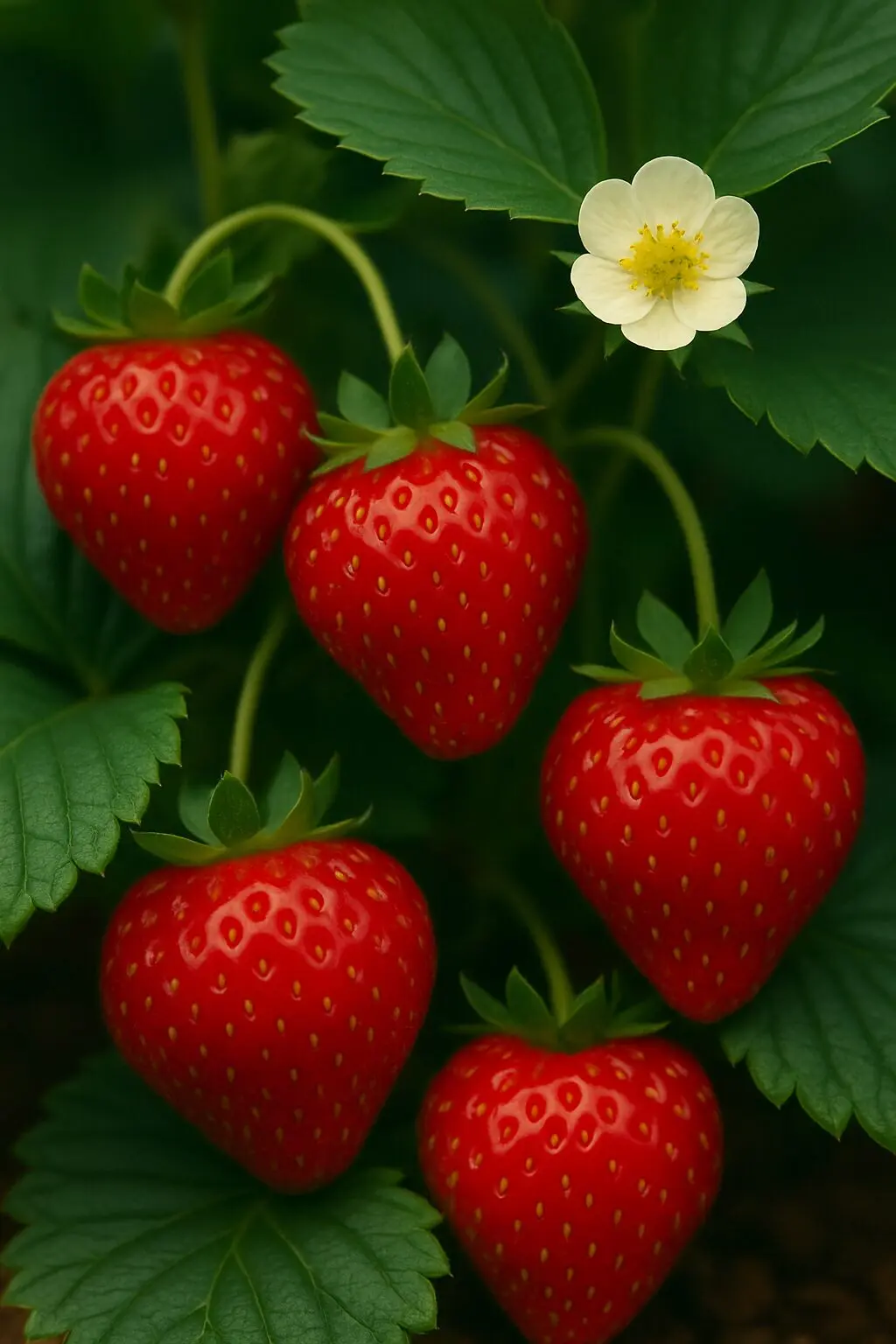
Strawberries are among the most popular fruits in the world. Botanically, they are not true berries but aggregate accessory fruits: the actual fruits are the tiny “seeds” (achenes) on the surface, while the red flesh develops from the swollen base of the flower.
The modern garden strawberry (Fragaria × ananassa) was created in 18th-century France by crossing a North American and a Chilean wild species. Strawberries are low in calories and rich in vitamin C, folate, manganese and polyphenols such as anthocyanins and ellagitannins.
Nutritional values (per 100 g)
| Nutrient | Amount |
|---|---|
| Calories | 32 kcal |
| Protein | 0.7 g |
| Carbohydrates | 7.7 g |
| Natural sugars | 4.9 g |
| Fiber | 2.0 g |
| Vitamin C | 59 mg (66%) |
| Vitamin A | 1 µg |
| Folate (B9) | 24 µg |
| Manganese | 0.4 mg |
| Potassium | 153 mg |
| Polyphenols | high content |
Health benefits
Heart and blood vessels
In a large US study of nurses, women who ate strawberries and blueberries at least three times a week had a lower risk of heart attack. Smaller studies show that strawberries can improve blood lipids and reduce inflammatory markers.
Blood sugar
Despite their sweetness, strawberries have a low glycemic index and contain relatively little sugar. In studies, strawberries eaten with a meal softened the rise in blood sugar and insulin. They are a good fruit for people with insulin resistance or type 2 diabetes – preferably fresh or frozen, without added sugar.
Brain
In observational studies, people who ate more berries – especially strawberries and blueberries – showed slower cognitive decline in older age. Whether this is caused by the berries themselves is not yet proven. There is no evidence that strawberries help with ADHD.
Gut
Strawberries contain pectin and other fibers as well as polyphenols that can feed beneficial gut bacteria. There is no evidence that they help specifically with leaky gut.
Skin and immune system
With almost 60 mg per 100 g, strawberries are an excellent source of vitamin C, which is needed for collagen formation and contributes to normal immune function. They also provide manganese and folate, which is important for cell division and especially during pregnancy.
Note: Some people react to strawberries with itching, skin rashes or digestive upset – often a pseudo-allergic reaction, as strawberries can release histamine in the body.
Culinary uses
Strawberries are delicious raw, but also work well in smoothies, oatmeal, pancakes, compotes, salads, jams and desserts. They go surprisingly well with savory dishes such as duck, goat cheese, black pepper or balsamic vinegar. They can be frozen, dried or freeze-dried.
Herbal use and natural remedies
Strawberry leaves are traditionally used as a mild, slightly astringent tea for digestive complaints and mild diarrhea. In folk medicine, crushed strawberries were applied to the skin. Today strawberry extract is popular in masks and toners.
Suggested daily intake
- Fresh: 100–200 g a day during the season
- Freeze-dried: 10–20 g a day
- Juice or purée (unsweetened): up to 100 ml a day
Good combinations
- With mint and green tea – a refreshing combination
- With blackcurrants – even more vitamin C
- With almonds or chia seeds – for satiety and extra fiber
- With plain yogurt – for a light, probiotic breakfast
Did you know?
Strawberries contain slightly more vitamin C than oranges by weight – 100 g cover more than 60% of your daily needs, with only 32 kcal.
Organic strawberries are worth considering: conventional strawberries are among the fruits that most often contain pesticide residues.
Breakfast recipe
Millet porridge with strawberries and mint
Cook millet in plant-based milk with a touch of vanilla. Top with a handful of fresh strawberries, 1 tsp chia seeds, a few mint leaves and a squeeze of lemon juice.
Smoothie recipe
Strawberry and kefir smoothie
Blend 1 cup strawberries, ½ banana, 100 ml kefir, 1 tbsp rolled oats and a few mint leaves. Creamy, rich in vitamin C and good for the gut.
In summary
Strawberries are low in calories, rich in vitamin C and full of polyphenols. They are a good choice for your heart and blood sugar and are easy to fit into everyday meals – fresh in season, frozen the rest of the year.