Inonotus obliquus
What is chaga?
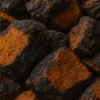
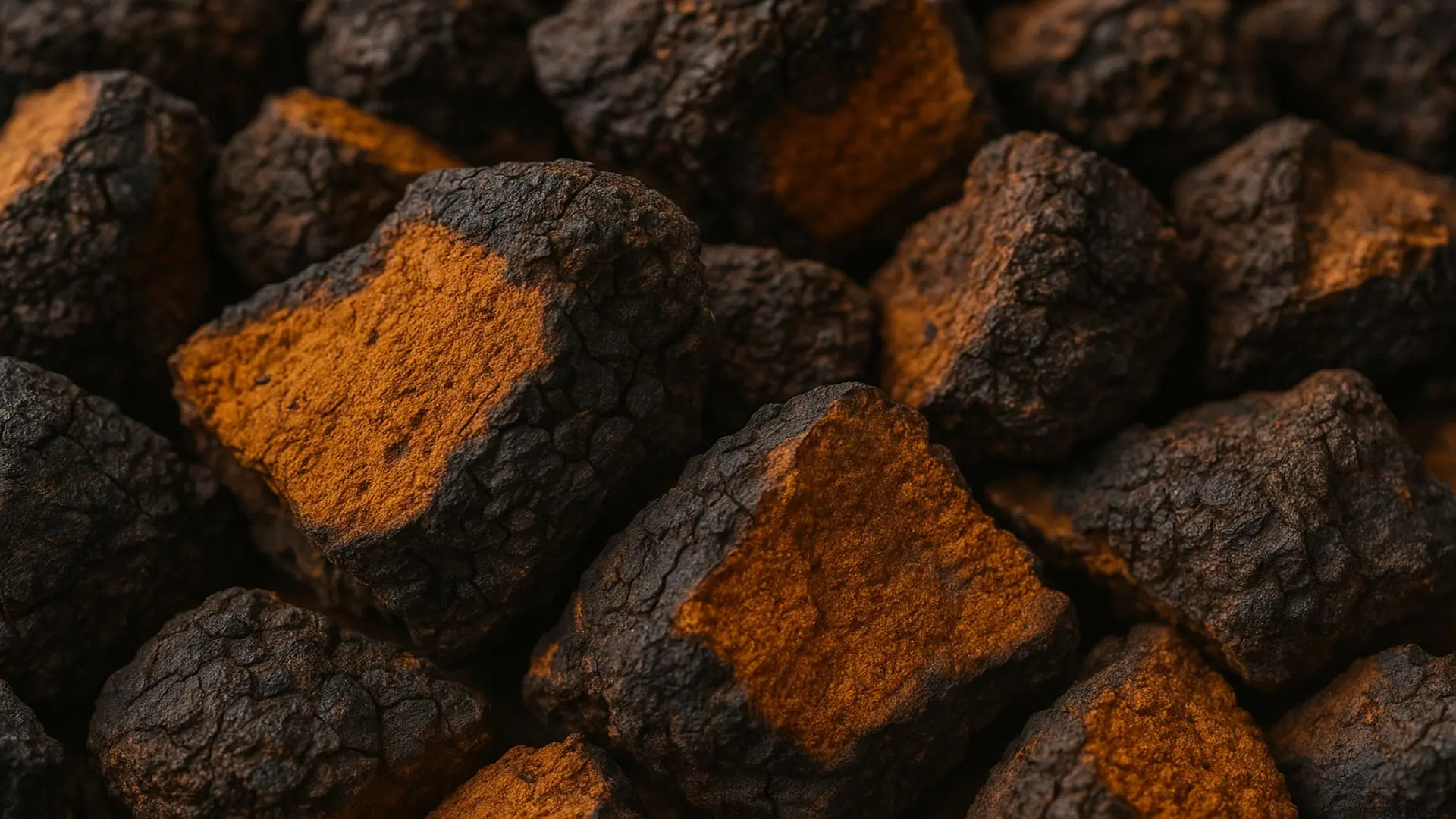
Chaga, also known as birch conk or clinker polypore, grows mainly on birch trees in cold regions such as Siberia, Scandinavia, northern Japan and Canada. What you see on the trunk is not a typical fruiting body but a hard, black growth (sclerotium) that looks like burnt charcoal. Inside it is rust-brown and corky.
Chaga has been used in Russian and Eastern European folk medicine for centuries, mainly as a tea for stomach complaints and general strength. Today it is popular as a supplement because of its high antioxidant content. Most of the research so far comes from laboratory and animal studies; human studies are almost entirely lacking.
Nutritional profile (per 100 g, dried)
| Nutrient | Amount |
|---|---|
| Polysaccharides (β-glucans) | 35 g |
| Dietary fiber | 28 g |
| Polyphenols | 2.1 g |
| Triterpenes (incl. betulin) | 1.8 g |
| Copper | 0.6 mg |
| Manganese | 2.3 mg |
| Potassium | 620 mg |
| Calcium | 48 mg |
| Vitamin D | 7.5 µg |
These are approximate values; the composition of wild chaga varies greatly depending on the tree, region and age. Chaga is also very high in oxalates – more on that below.
Possible health benefits
In laboratory and animal studies, chaga extracts have shown the following effects:
- Antioxidant – chaga is rich in polyphenols and melanin pigments
- Immune-modulating – mainly through beta-glucans
- Anti-inflammatory – lower inflammatory markers in animal models
- Anti-tumor effects – in cell cultures and animals, not in humans
- Blood sugar-lowering – in diabetic animals
- Protective effects on the gut lining – in animal models of colitis
These results are interesting, but they cannot simply be transferred to humans. There are currently no reliable clinical studies showing that chaga prevents cancer, treats diabetes, heals leaky gut or helps with ADHD or autoimmune diseases.
Uses
In the kitchen:
Chaga is too hard and woody to eat. It is used:
- as tea or decoction – the most traditional form,
- as powder for drinks or capsules,
- in coffee substitutes or mushroom blends.
In folk medicine:
- Traditionally used in Russia and Siberia as tea for stomach complaints and general strength
- Has been used in Russia as an approved remedy for gastrointestinal complaints
- Is sometimes used as a complementary remedy during cancer treatment – only in consultation with the treatment team, as interactions are possible
In skincare:
- Chaga extracts are used for:
- antioxidant protection,
- calming irritated skin,
- supporting the skin barrier.
In ecology and foraging:
- Grows almost exclusively on living birch trees and takes many years to form
- The sclerotium cannot be cultivated; cultivated products usually contain mycelium, which has a different composition
- Growing demand has led to overharvesting in some regions – buy from sustainable sources and never harvest more than a small part of a growth
Did you know?
Chaga is often advertised with extremely high ORAC values (a laboratory measure of antioxidant capacity). The US Department of Agriculture withdrew its ORAC database in 2012 because the values say little about effects in the human body. A high ORAC value is therefore not proof of health benefits.
Chaga contains small amounts of betulin and betulinic acid, which it takes up from the birch bark. In laboratory studies these compounds have shown anti-inflammatory, antiviral and anti-tumor effects.
How to use it and recommended intake
- Chaga tea: simmer 5–10 g of crushed chaga in 1 liter of water for about 60 minutes
- Powdered extract: usually 1–2 g a day
- There are no studies on the optimal dose or duration; many people take chaga in cycles, for example three weeks on, one week off
Important safety notes:
- Chaga contains very high amounts of oxalate. Cases of kidney damage have been reported after long-term daily use of chaga powder. People with kidney disease or kidney stones should avoid it; everyone else should not take it in large amounts over a long period.
- Chaga can inhibit blood clotting – caution with blood thinners and before surgery.
- Chaga can lower blood sugar – caution with diabetes medication.
- Not recommended during pregnancy or breastfeeding, after transplants, with immunosuppressive medication or with autoimmune diseases without medical advice.
Combinations
- Reishi – often combined for the immune system and stress
- Lion’s mane – for the brain and gut
- Blackcurrant or aronia – rich in vitamin C and polyphenols
- Ginger – gives the tea a warming, spicy note
- Turmeric with black pepper – anti-inflammatory spice combination
Recipe: chaga tea with ginger and cinnamon
Ingredients:
- 7 g crushed dried chaga
- 1 liter of water
- ½ tsp cinnamon
- Slice of fresh ginger
- Optional: lemon juice & honey
Preparation:
- Simmer the chaga in the water on low heat for 1 hour.
- Add the ginger and cinnamon for the last 10 minutes.
- Strain and add lemon or honey to taste.
- Keeps in the fridge for up to 3 days.
The tea has an earthy, slightly vanilla-like taste. Because of its oxalate content, one cup a day is plenty.
In summary
Chaga is a fascinating birch mushroom with a long tradition and a high antioxidant content. Laboratory and animal studies are promising, but human data is lacking, and the high oxalate content is a real risk with long-term use. If you want to try it, use it in moderation, buy from sustainable sources and check with your doctor first if you take medication or have kidney problems.