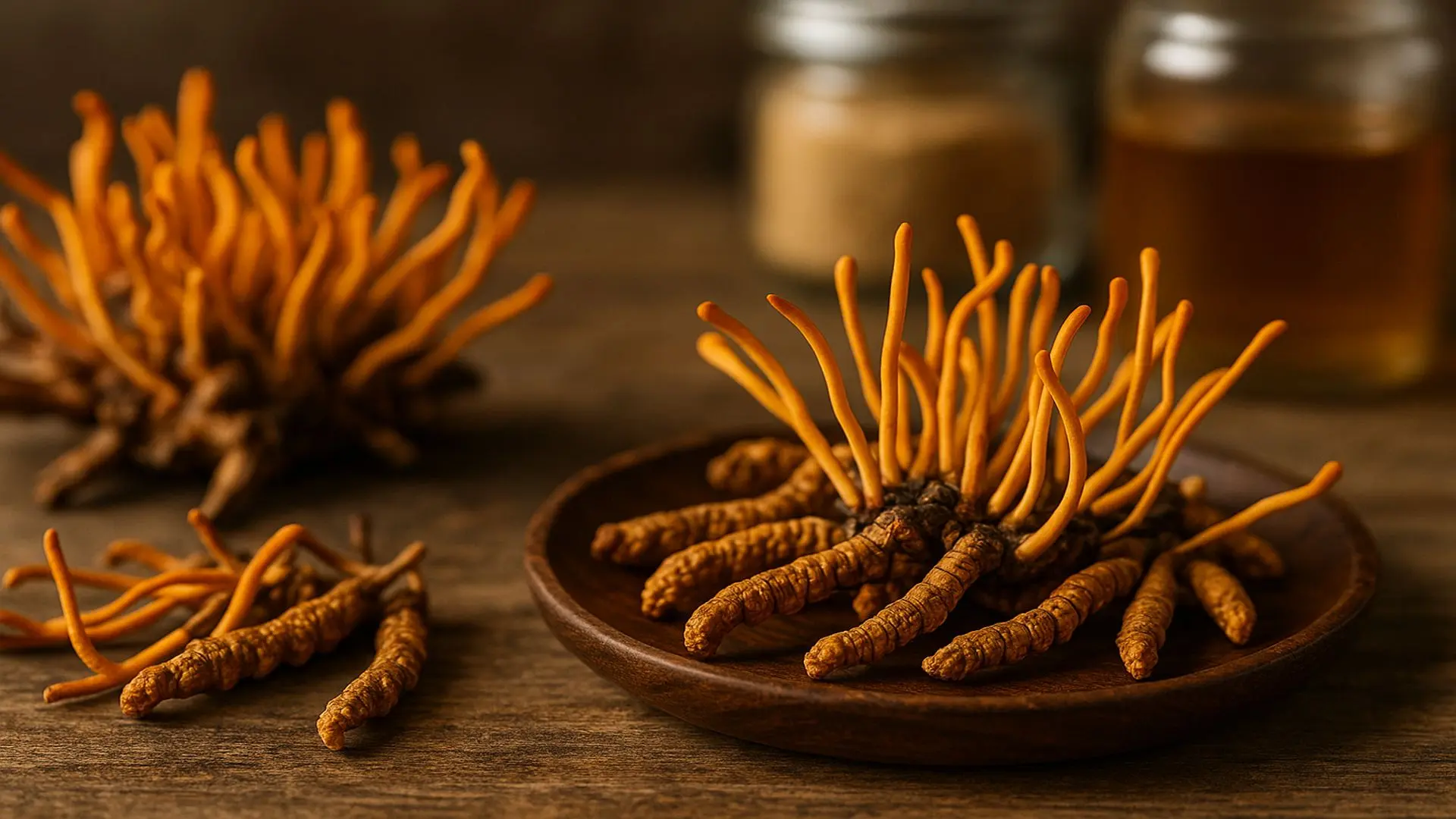
Cordyceps sinensis
Cordyceps has one of the strangest life cycles in the natural world. In the wild, the fungus infects caterpillars in the high mountains of Tibet and Nepal, and eventually grows out of their bodies as a thin, club-shaped stalk. In traditional Chinese and Tibetan medicine it has long been valued as a tonic for energy, the lungs and the kidneys, and as an aphrodisiac.
Wild cordyceps (now called Ophiocordyceps sinensis) is rare and extremely expensive. Almost all supplements therefore contain cultivated alternatives: either mycelium of the strain Cs-4, grown in fermentation tanks, or Cordyceps militaris, which can be grown on grain or other substrates. They contain similar compounds, but in different proportions – so not every product is the same.
Possible health benefits
- Energy and endurance
In laboratory studies, cordyceps influences how cells produce ATP, their main energy source. Small studies in older adults found slight improvements in oxygen uptake and exercise performance; studies in trained athletes mostly found no effect. - Libido
Cordyceps is traditionally used as an aphrodisiac. Animal studies show effects on sex hormones, but there is hardly any reliable data in humans. - Breathing
Traditionally used for coughs, asthma and chronic lung complaints. Some Chinese studies report benefits as an add-on treatment, but their quality is often low. - Blood sugar
In diabetic animals, cordyceps lowered blood sugar and improved insulin sensitivity. There are no meaningful human studies yet. - Immune system
Cordycepin and polysaccharides have immune-modulating, anti-inflammatory and antiviral effects in the laboratory. - Kidneys
In China, cordyceps preparations are used as an add-on treatment for chronic kidney disease. Reviews see possible benefits, but the studies are of low quality – and people with kidney disease should only take supplements under medical supervision.
Key active compounds
| Compound | Action |
|---|---|
| Cordycepin | Antiviral, anti-inflammatory, immune-modulating |
| Polysaccharides | Immune support, gut microbiome balance |
| Purine nucleosides | Enhance metabolic and energy function |
| Ergosterol | Vitamin D precursor, supports bone health |
| Adenosine | Regulates sleep, circulation, and relaxes blood vessels |
The effects listed are based mainly on laboratory and animal studies. Cordyceps militaris generally contains more cordycepin than Cs-4 mycelium.
How to use it
- Powder – in smoothies, yogurt or tea
- Capsules or extracts – practical and concentrated; studies typically used 1–3 g a day
- Decoction – the traditional form; simmer dried cordyceps slowly
Look for products that state the species, the part used (fruiting body or mycelium) and the content of active compounds, and that have been tested by an independent laboratory. Because cordyceps is often taken for energy, many people take it in the morning or before exercise.
Safety
Cordyceps is well tolerated by most people. Mild digestive upset, dry mouth or nausea are possible. Caution is advised:
- during pregnancy and breastfeeding – there is not enough safety data,
- with autoimmune diseases and immunosuppressive medication, as cordyceps may stimulate the immune system,
- with blood thinners or before surgery, as it may inhibit blood clotting,
- with diabetes medication, as it may lower blood sugar.
Talk to your doctor before taking it if any of these apply to you.
Can cordyceps help with ADHD, diabetes, insulin resistance or leaky gut?
- ADHD – There are no studies. Cordyceps is not a treatment for ADHD.
- Type 2 diabetes – Promising animal data, but no reliable human studies. Not a replacement for treatment.
- Insulin resistance – As above: positive results in animals only.
- Leaky gut – Polysaccharides may influence the gut microbiome; human data is lacking.
In summary
Cordyceps is a fascinating fungus with a long history in Tibetan and Chinese medicine. The most promising human data concern exercise capacity in older adults, but even there the effects are small. If you want to try it, choose a well-labeled product, give it a few weeks – and keep your expectations realistic.