Arthrospira platensis
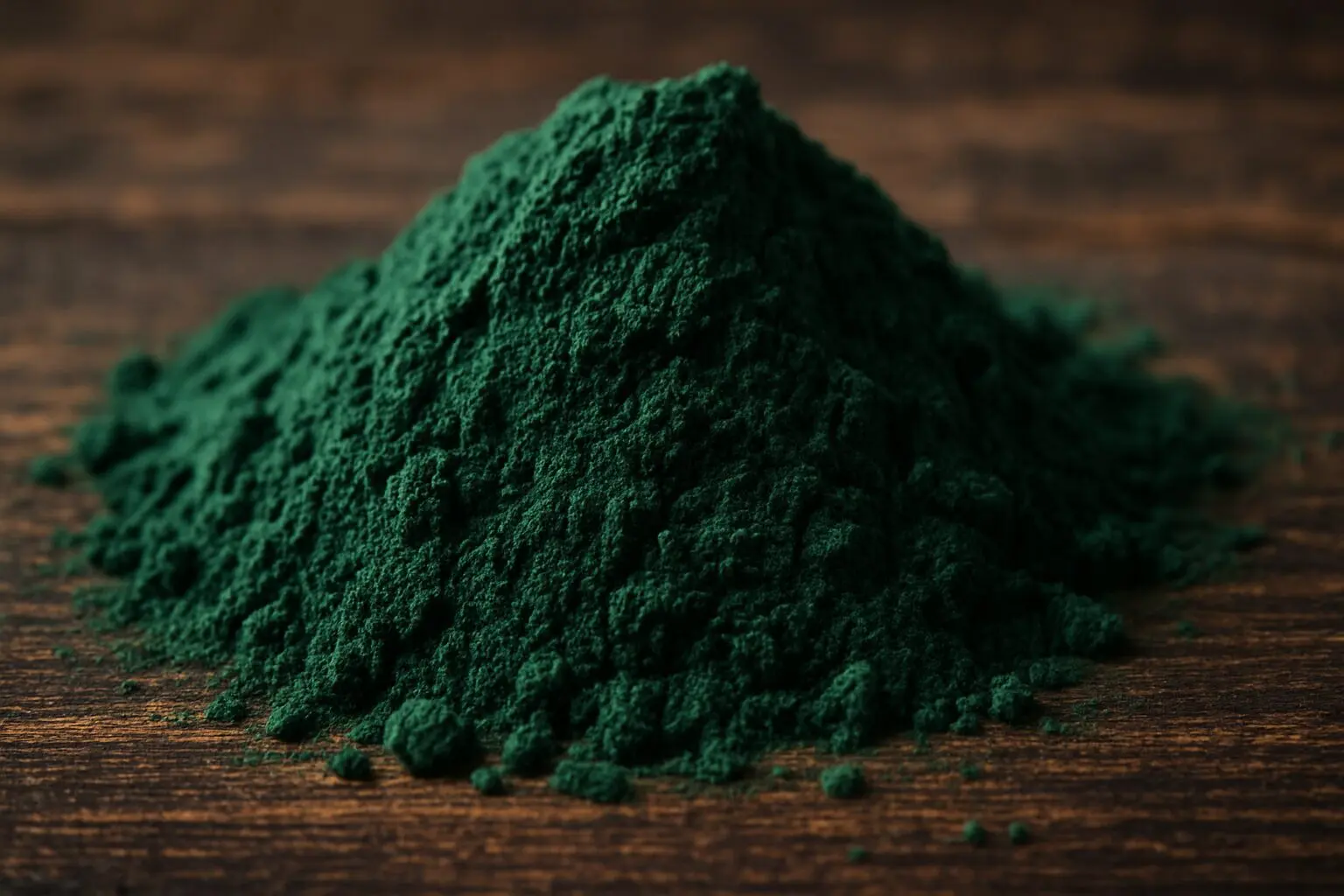
Spirulina is a blue-green microalga that is sold as a powder or tablets. It is one of the most concentrated plant foods available, with a protein content of up to 70%, plenty of iron and vitamins, and pigments with antioxidant properties. NASA even studied it as a possible food for long space missions.
What exactly is spirulina?
Strictly speaking, spirulina is not a plant but a cyanobacterium – a microorganism that uses photosynthesis. It grows naturally in warm, alkaline lakes and today is mostly cultivated in controlled ponds. Its blue color comes from phycocyanin, its green from chlorophyll.
Health benefits of spirulina
1. Supports the immune system and energy levels
Studies suggest spirulina can stimulate parts of the immune system, including antibody production and the activity of natural killer cells. Its iron and B vitamins also contribute to normal energy metabolism – helpful if your diet is low in these nutrients.
2. Antioxidant and anti-inflammatory effects
Phycocyanin is a strong antioxidant and has anti-inflammatory effects in laboratory studies. Some research suggests spirulina may help the body cope with exposure to certain heavy metals such as arsenic, but this is not a reason to rely on it for “detox”.
3. May improve cholesterol and blood sugar
Meta-analyses of clinical trials show that spirulina can modestly lower LDL cholesterol and triglycerides and improve blood sugar control in people with type 2 diabetes. It complements treatment and a healthy diet; it does not replace medication.
4. Protein for recovery and satiety
With its high protein content, spirulina can help you reach your protein target and stay full for longer. A teaspoon adds only a few grams, though, so it works best as a supplement to other protein sources.
Nutritional value of spirulina powder (per 100 g)
| Nutrient | Amount |
|---|---|
| Calories | 290 kcal |
| Protein | 57–70 g |
| Fat | 7.7 g |
| Carbohydrates | 24 g |
| Iron | 28.5 mg |
| Magnesium | 195 mg |
| Vitamin B1 (Thiamine) | 2.38 mg |
| Vitamin B2 (Riboflavin) | 3.67 mg |
| Vitamin B12 | 0–80 µg* |
| Chlorophyll | ~1000 mg |
| Phycocyanin | ~1–2 g |
*Most of the B12 in spirulina is an inactive analogue that the human body cannot use. Do not rely on spirulina as a source of vitamin B12.
Safety and quality
- Choose tested products. Spirulina from uncontrolled sources can be contaminated with heavy metals or with microcystins, toxins produced by other algae. Look for products with independent lab testing.
- Not for everyone. People with phenylketonuria (PKU) should avoid spirulina because of its phenylalanine content. If you have an autoimmune disease or take immunosuppressants, talk to your doctor first, as spirulina can stimulate the immune system.
- Start low. Begin with about 1 g a day and increase gradually to the commonly used 3–5 g.
Spirulina myths, checked
“It’s just algae – how good can it be?”
Very good, nutritionally speaking. But it is not a miracle cure, and it is not more effective at “detoxing” than your liver and kidneys already are.
“The taste is awful.”
It is earthy and slightly marine. Blended with banana, mango or coconut milk it is easy to drink, and tablets avoid the taste entirely.
Worth knowing
- An Aztec food. The Aztecs harvested spirulina from Lake Texcoco and dried it into cakes.
- Space food. NASA researched spirulina as a compact, nutrient-dense food for astronauts.
How to use spirulina
- In a smoothie – one teaspoon in a tropical fruit shake.
- As a green spread – mixed with avocado, garlic and lemon on toast.
- In soup – stirred into broccoli or pumpkin soup just before serving, to protect its nutrients from heat.
- As capsules or tablets – if you don’t like the taste.
Summary
Spirulina is a concentrated source of protein, iron and antioxidants with promising effects on cholesterol, blood sugar and the immune system. Choose a tested product, start with a small dose and treat it as a supplement to a varied diet.