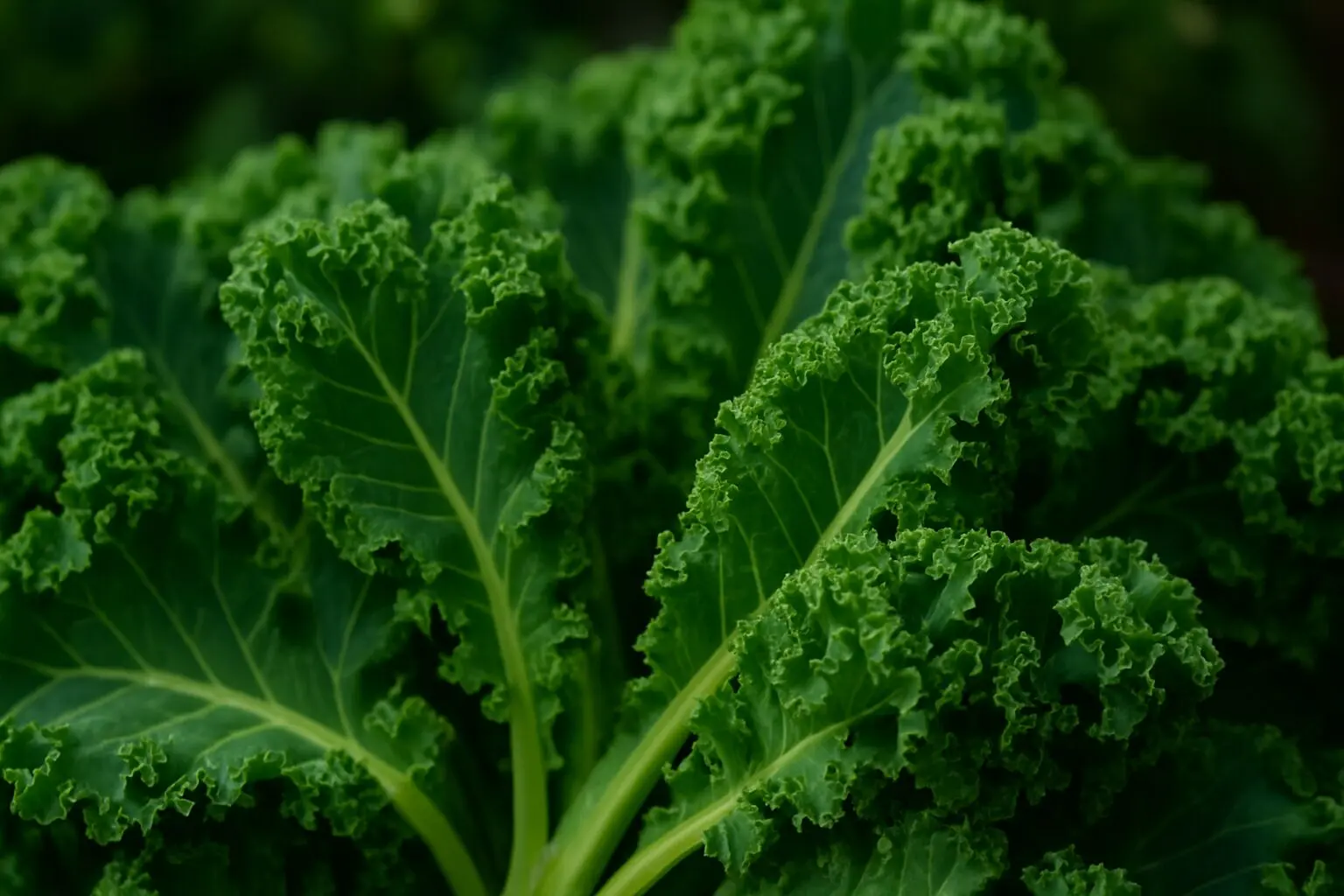
Kale has a reputation as a superfood, and for once the label is not far off. Gram for gram it is one of the most nutrient-dense vegetables you can buy, with exceptional amounts of vitamins K and C and a good dose of protective plant compounds.
What makes kale special?
Kale is a member of the cabbage family, like broccoli and Brussels sprouts. Its sturdy leaves keep well, survive frost (which even makes them sweeter) and work raw or cooked. Its strength is the combination of vitamins, minerals, fiber and glucosinolates – sulfur compounds typical of cabbage vegetables that are being studied for their protective effects.
Health benefits of kale
1. Supports heart health
Kale is rich in potassium, fiber and antioxidants, all of which contribute to healthy blood pressure and blood vessels. Its vitamin C is needed to make collagen, which keeps vessel walls elastic. Vitamin K also plays a role in vascular health – and is one reason people on blood thinners such as warfarin should keep their kale intake consistent and discuss it with their doctor.
2. Contributes to a healthy immune system
With around 120 mg of vitamin C per 100 g, raw kale contains more than an orange. Vitamin C supports the function of immune cells, and kale’s beta-carotene adds to this. Eating kale regularly is no guarantee against colds, but it is an easy way to cover your vitamin C needs.
3. Good for digestion
The fiber in kale feeds your gut bacteria and helps keep bowel movements regular. A healthy gut is also part of how the body gets rid of waste products – no special detox needed.
4. Anti-inflammatory compounds
Kale provides antioxidants such as quercetin and kaempferol, as well as small amounts of plant omega-3 fatty acids (ALA). These may help dampen low-grade inflammation, which is linked to many chronic conditions.
Nutritional value of kale (per 100 g, raw)
| Nutrient | Amount |
|---|---|
| Calories | 49 kcal |
| Protein | 4.3 g |
| Fat | 0.9 g |
| Carbohydrates | 9.0 g |
| Fiber | 2.0 g |
| Vitamin A | 241 µg |
| Vitamin C | 120 mg |
| Vitamin K | 817 µg |
| Folate | 141 µg |
| Iron | 1.5 mg |
| Magnesium | 47 mg |
| Potassium | 491 mg |
Kale myths, checked
“Kale is the perfect vegetable for vegans.”
Kale is a valuable part of a plant-based diet: it provides calcium that is well absorbed, iron, folate and some protein. With about 4 g of protein per 100 g, though, it is not a main protein source – legumes, tofu, nuts and seeds do that job better.
“Kale is hard to digest.”
Not for most people. Raw kale can cause bloating if you are not used to a lot of fiber or if you have irritable bowel syndrome. Massaging raw leaves with a little oil and salt, or cooking them briefly, makes them much easier to digest.
Worth knowing
- A long history. Kale is one of the oldest cultivated forms of cabbage and was eaten throughout Europe in the Middle Ages, long before it became a modern health trend.
- Frost improves the flavor. Cold weather converts some of the starch in the leaves into sugar, which is why winter kale tastes milder.
How to eat more kale
- In a smoothie. Blend a few leaves with banana, apple and yogurt – the fruit balances the slightly bitter taste.
- In soup. Kale adds body to winter soups with garlic, onion and olive oil, and keeps its texture better than spinach.