Grifola frondosa
What is maitake and why is it called the “dancing mushroom”?
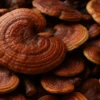
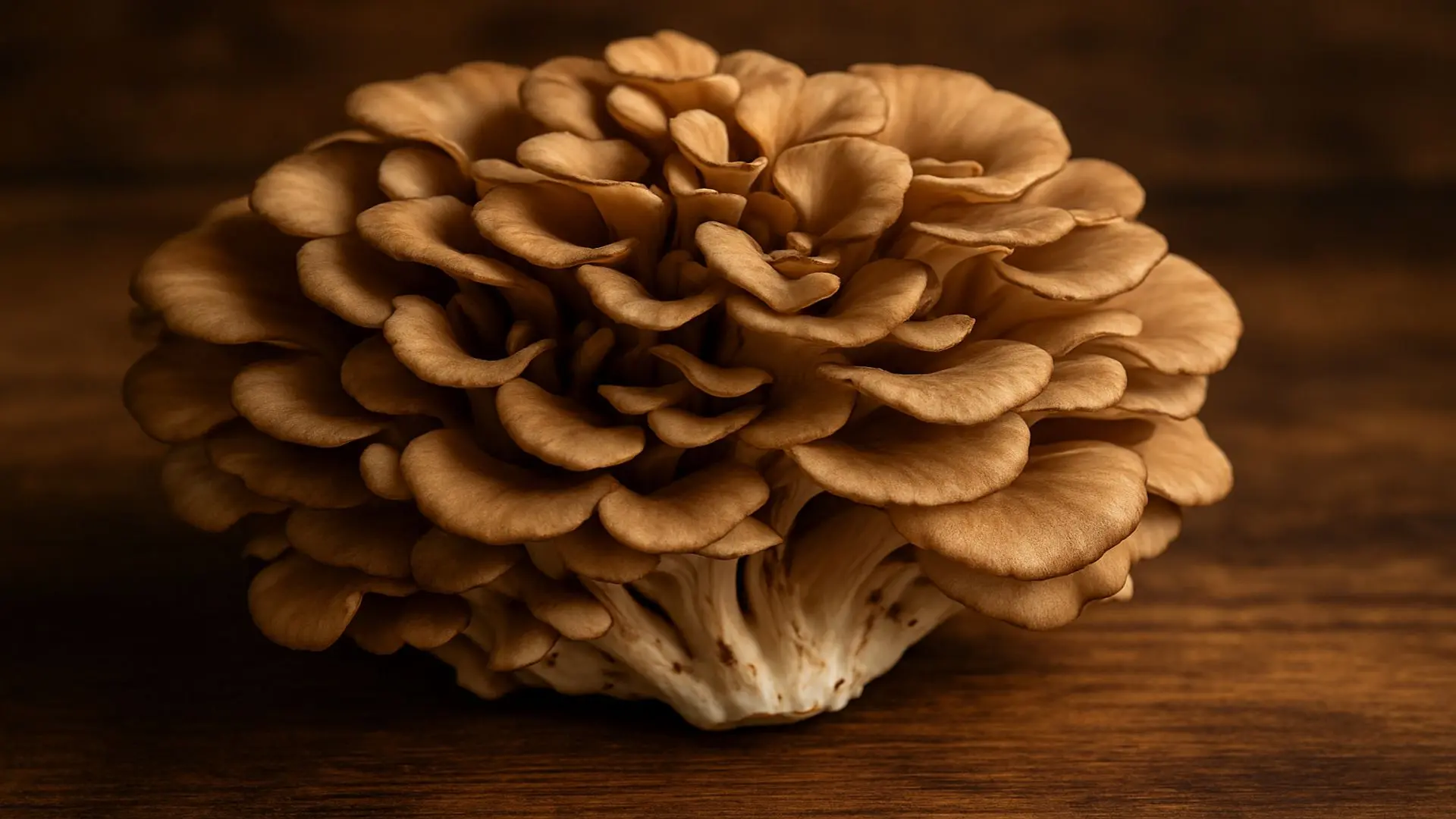
Maitake means “dancing mushroom” in Japanese. According to one popular explanation, the name goes back to the days when the wild mushroom was so rare and valuable that people who found it danced with joy. In English it is also known as hen of the woods, because its clusters of overlapping, frilly caps resemble the ruffled feathers of a sitting hen.
Maitake grows at the base of oaks and other hardwood trees and is both an excellent edible mushroom and a medicinal mushroom. It has a firm texture and a rich, slightly nutty, earthy flavor, and is delicious fried in butter or oil. As a medicinal mushroom it is mainly studied for its beta-glucans, which influence the immune system and blood sugar.
What does maitake contain?
Approximate values for the dried mushroom:
| Active Compound | Amount per 100 g |
|---|---|
| Beta-glucans (D-fraction, MD-fraction) | 15–20 g |
| Protein | 20–25 g |
| Fiber | 25–30 g |
| Potassium | 2000 mg |
| Calcium | 10 mg |
| Iron | 1.5 mg |
| Vitamin B3 (niacin) | 6–8 mg |
| Vitamin D2 | 50–100 IU |
The so-called D-fraction and MD-fraction are standardized beta-glucan extracts from maitake that have been studied extensively in Japan, mainly in the laboratory and in animals, and in a few small studies in humans.
How does maitake work and who might benefit?
Maitake is mainly considered an immunomodulator – it can influence the activity of immune cells. Based on current research, it may:
- activate immune cells such as macrophages and NK cells (laboratory and animal studies),
- lower blood sugar and improve insulin sensitivity (animal studies; a fraction called SX-fraction has been tested in a few small human studies),
- have anti-tumor effects (cell and animal studies; small, early studies in cancer patients),
- lower blood pressure and blood lipids (mainly animal studies).
Maitake is sometimes used as a complementary treatment for cancer, particularly in Japan. Reliable evidence that it improves survival or the course of the disease is lacking, so it should only be used during cancer treatment in consultation with the treatment team.
There is no evidence that maitake helps with ADHD, leaky gut, chronic fatigue or autoimmune diseases.
Maitake and blood sugar
Blood sugar is one of the most interesting areas of maitake research. In diabetic animals, maitake extracts lowered blood sugar and improved insulin sensitivity. The few human studies are small and of limited quality, but point in a similar direction.
If you take diabetes medication, maitake may lower your blood sugar further. Monitor your levels carefully and talk to your doctor before taking an extract.
How to use maitake
- In the kitchen: fresh or dried in soups, stir-fries, risotto or roasted in the oven – the simplest way to enjoy it
- Powder: 1–2 g a day in warm water or broth
- Standardized extract (D-fraction, MD-fraction): according to the manufacturer’s instructions
- Capsules: practical, but check that the beta-glucan content is stated
- Decoction: simmer 5 g of dried mushroom for 30–45 minutes
Any effects of extracts develop gradually over several weeks of regular use.
Combinations
- Reishi – also used for the immune system
- Lion’s mane – for the brain and nerves
- Turmeric – anti-inflammatory spice
- Ginger and garlic – classic in maitake soups
There are hardly any studies on combinations of medicinal mushrooms.
Uses of maitake
- In the kitchen: a popular edible mushroom, especially in Japanese cuisine
- In naturopathy: as an extract for the immune system and blood sugar
- In cosmetics: occasionally in skincare products for its antioxidant properties
- In gardening: can be grown on hardwood logs or sawdust
What to look for when buying
- Extracts standardized to D-fraction or with a stated beta-glucan content (at least 20%)
- Fruiting body extracts rather than cheap blends without a stated content
- Independent laboratory testing; ideally organic and grown on wood
Contraindications and side effects
Maitake is well tolerated as food. With extracts, caution is advised:
- with diabetes medication – maitake can lower blood sugar,
- with blood pressure medication or low blood pressure – it may lower blood pressure,
- with blood thinners such as warfarin – a case report suggests an interaction,
- with autoimmune diseases or immunosuppressive medication – maitake may stimulate the immune system,
- before surgery – stop taking it two weeks beforehand,
- during pregnancy and breastfeeding – there is not enough safety data.
Digestive upset and allergic reactions are possible but rare.
Recipe: maitake and ginger soup
Ingredients:
- 5 g dried maitake or 100 g fresh
- 1 liter water or vegetable broth
- 2 slices of ginger
- 1 garlic clove
- 1 tbsp tamari sauce
- Chopped scallions and sesame seeds for garnish
Instructions: Simmer the mushrooms with ginger and garlic for 30 minutes. Season with tamari and serve sprinkled with scallions and sesame. A warming soup for cold evenings.
In summary
Maitake is first of all an excellent edible mushroom – and secondly an interesting medicinal mushroom, particularly for the immune system and blood sugar. Most of the evidence comes from laboratory and animal studies. Enjoy it in the kitchen, and if you want to try an extract, check for interactions with your medication first.
Disclaimer
This text is for informational and educational purposes only. It is not a substitute for medical advice. If you have chronic conditions, are pregnant, taking medication, or have any health concerns, consult your doctor before use.