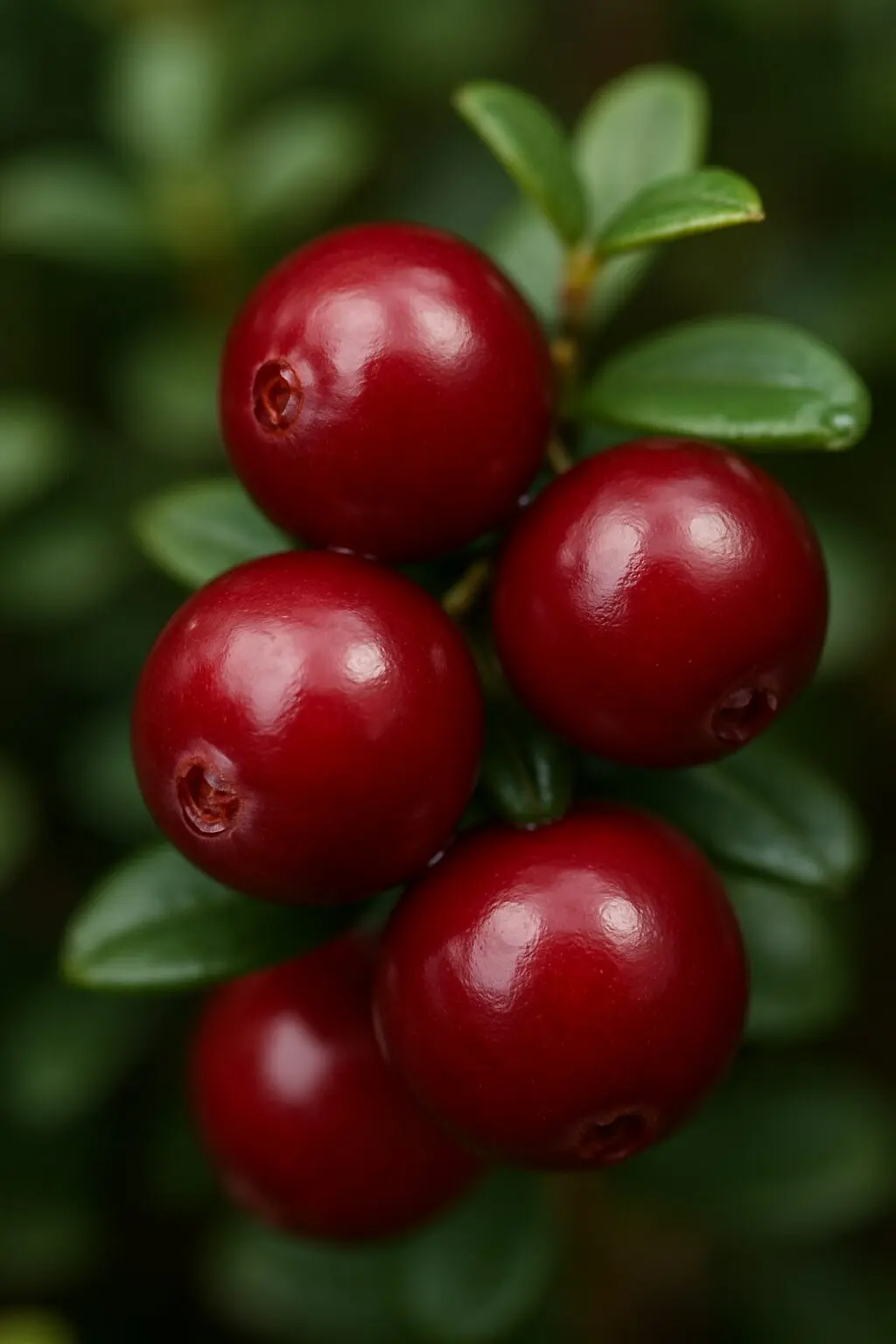
Vaccinium macrocarpon
Cranberries are best known as a sauce for turkey and as a home remedy for bladder infections. Their sharp, sour taste comes from organic acids, and their red color from anthocyanins. What makes them special is a particular type of proanthocyanidins (A-type PACs), which can prevent certain bacteria from sticking to the walls of the urinary tract.
The American cranberry originally comes from the bogs of North America, where Native Americans used it as food, dye and medicine and to make pemmican, a long-lasting mixture of dried meat, fat and berries. Today cranberries are studied mainly for urinary tract health, but also for their effects on the heart, gut and oral health.
Nutritional values (per 100g of fresh cranberries)
| Nutrient | Amount |
|---|---|
| Calories | 46 kcal |
| Carbohydrates | 12 g |
| Dietary fiber | 4.6 g |
| Natural sugars | 4 g |
| Vitamin C | 14 mg |
| Vitamin E | 1.2 mg |
| Manganese | 0.36 mg |
| Proanthocyanidins | very high |
| Phenolic acids | present |
What can cranberries help with?
- Urinary tract infections (UTIs) – A Cochrane review from 2023 found that cranberry products can reduce the risk of recurrent urinary tract infections in women with frequent infections, in children and in people after certain medical procedures. Cranberries are for prevention – they do not treat an existing infection. If you have symptoms such as burning, fever or flank pain, see a doctor.
- Oral health – In laboratory studies, cranberry compounds inhibit bacteria that cause plaque and gum inflammation.
- Stomach – Some studies suggest that cranberry juice may inhibit Helicobacter pylori, a bacterium that can cause stomach ulcers.
- Heart and blood vessels – Polyphenols may improve blood vessel function; some studies found slightly better blood lipids and blood pressure.
- Gut – Fiber and polyphenols can feed beneficial gut bacteria.
- Immune system and skin – Vitamin C and polyphenols protect cells from oxidative stress.
There is no evidence that cranberries help with ADHD, leaky gut, type 2 diabetes or insulin resistance. Note that sweetened dried cranberries and cranberry juice drinks often contain a lot of added sugar.
Uses
Culinary
- In cranberry sauce, granola, smoothies, jams, compotes and baked goods
- Pair well with apple, orange, cinnamon, ginger, turmeric and nuts
- Fresh cranberries are very tart – combine them with sweeter fruits
Herbal and naturopathic
- Juice, powder or extracts to prevent recurrent urinary tract infections
- Standardized capsules with a stated PAC content (often 36 mg a day in studies)
Cosmetic
- Cranberry extracts are used in creams for their antioxidant properties
- Cranberry seed oil nourishes dry or sensitive skin
- Fresh berries are an ingredient in homemade face masks
Gardening
- Low-growing shrub that needs acidic, moist, humus-rich soil – like blueberries
- Can be grown in pots with ericaceous compost
- Decorative red berries in autumn and winter
Good combinations
- Ginger and turmeric – in warming drinks and sauces
- Cinnamon – softens the sour taste
- Plain yogurt or kefir – for the gut
- Walnuts and hazelnuts – provide healthy fats and vitamin E
- Oranges – a classic pairing that adds vitamin C
Amounts and warnings
- Suggested daily amounts:
- Fresh fruit: 50–100 g
- Dried (unsweetened!): 20–30 g
- Juice, powder or extracts: follow the label or your doctor’s advice
- If you take blood thinners such as warfarin, talk to your doctor before regularly consuming large amounts of cranberry juice or extracts. The evidence for an interaction is mixed, but bleeding complications have been reported in individual cases.
- Cranberry products contain oxalate. If you have had kidney stones, discuss larger amounts with your doctor.
Recipe: warm cranberry drink with ginger and honey
Ingredients:
- 1 handful of fresh or thawed cranberries
- 1 tablespoon lemon juice
- 1 teaspoon freshly grated ginger
- 1 cup warm (not boiling) water
- 1 teaspoon honey (buckwheat or linden honey work well)
- A pinch of cinnamon
Preparation:
Blend the cranberries with the lemon juice and ginger. Pour the warm water over the mixture and let it steep for 5 minutes. Strain, then stir in the honey and cinnamon. A warming drink for cold days.
Did you know…?
- Native Americans used cranberries to make pemmican, a long-lasting mixture of dried meat, fat and berries.
- Cranberries are often harvested by flooding the fields: the ripe berries contain small air pockets, float to the surface and can be skimmed off.
- Many dried cranberries in stores are heavily sweetened – look for “no added sugar”.
- Fresh cranberries bounce – this used to be a way to test their quality.
In summary
Cranberries are a tart, polyphenol-rich berry with good evidence for preventing recurrent urinary tract infections. They are not a treatment for acute infections. Unsweetened, in sauces, smoothies or baked goods, they are a healthy addition to your diet.