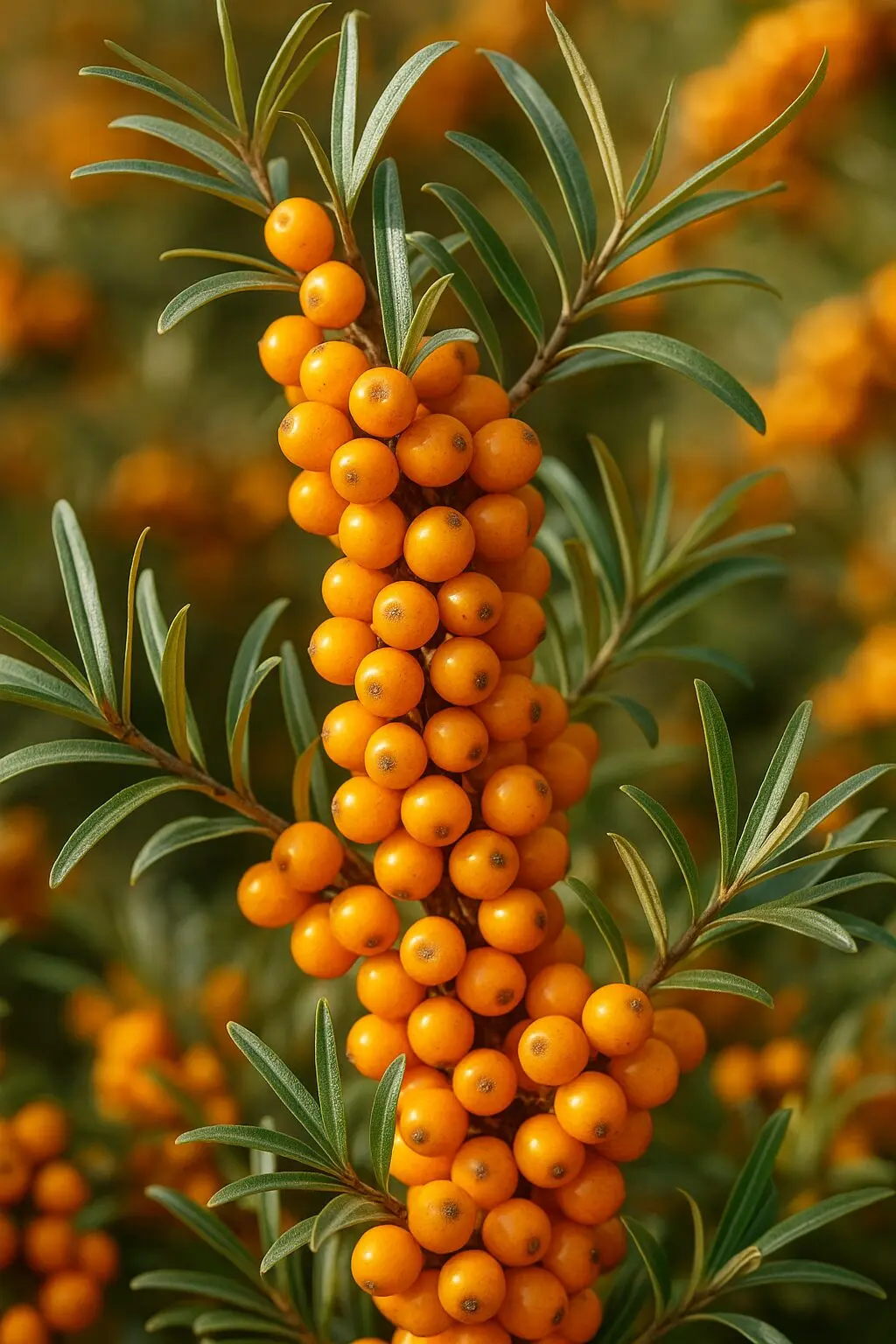
Hippophae rhamnoides
Bright orange berries with a sharp, sour-sweet taste: sea buckthorn grows on thorny shrubs along coasts, riverbanks and in mountain regions from Europe to Siberia and the Himalayas. In Russia, China and Mongolia it has been used for centuries as food and medicine, and in Germany sea buckthorn juice and jam are classics on the Baltic coast.
The berries are remarkable for their very high vitamin C content and for their oil, which contains rare omega-7 fatty acids. Here is what tradition and science say about them.
Nutritional profile per 100g (dried berries)
| Nutrient | Value |
|---|---|
| Energy | 305 kcal |
| Protein | 5.4 g |
| Fat | 9.0 g |
| Carbohydrates | 43.0 g |
| Fiber | 19.0 g |
| Vitamin C | 695 mg (1150% DV) |
| Vitamin E | 20.9 mg (140% DV) |
| Vitamin K | 110 µg (92% DV) |
| Vitamin A | 3100 IU |
| Vitamin B1, B2, B6 | present |
| Iron | 2.4 mg |
| Magnesium | 40 mg |
| Calcium | 40 mg |
| Potassium | 300 mg |
| Omega-7 | rare & abundant |
The vitamin C content varies greatly depending on the variety, region and processing – from around 100 mg to over 1000 mg per 100 g of fresh berries.
Health benefits of sea buckthorn
1. Rich in vitamin C
Depending on the variety, sea buckthorn contains several times more vitamin C than oranges. A small portion of berries or juice can cover your daily needs. Vitamin C contributes to the immune system, collagen formation in the skin and the absorption of iron from plant foods.
2. Immune system
Vitamin C is relatively stable in sea buckthorn berries, so the juice and dried berries also retain a good amount. A sufficient vitamin C intake supports normal immune function; whether sea buckthorn prevents colds has not been specifically studied.
3. Skin and wound healing
Sea buckthorn oil contains vitamin E, carotenoids and omega-7 fatty acids (palmitoleic acid). It is used in creams for dry and irritated skin, and in traditional medicine for burns and wounds. Small studies suggest benefits for atopic dermatitis and wound healing; larger studies are needed.
4. Heart and blood vessels
Some studies found that sea buckthorn can slightly improve blood lipids and reduce oxidative stress. The effects on blood pressure are small and inconsistent.
5. Mucous membranes and dry eyes
In a Finnish study, sea buckthorn oil capsules reduced the symptoms of dry eyes. The oil is also traditionally used for dry mucous membranes, for example in the mouth or vagina. Animal studies show protective effects on the stomach lining; human studies are lacking.
6. Inflammation and joints
The flavonoids and carotenoids in sea buckthorn have anti-inflammatory effects in laboratory studies. Whether it relieves joint pain in conditions such as rheumatoid arthritis has not been shown in humans.
7. Liver
Animal studies and a few small human studies suggest that sea buckthorn may protect the liver. It is not a treatment for liver disease.
8. Brain and mood
B vitamins and fatty acids are important for the nervous system, but there is no evidence that sea buckthorn helps with ADHD or improves memory and mood.
9. Eyes
Beta-carotene is converted into vitamin A, which is needed for normal vision. The dry-eye study mentioned above is the best evidence for direct effects on the eyes.
10. Skin aging
Vitamin C, vitamin E and carotenoids protect cells from oxidative damage. Sea buckthorn oil is popular in skincare for mature skin.
Caution: Sea buckthorn may slow blood clotting and lower blood pressure and blood sugar slightly. If you take blood thinners, blood pressure or diabetes medication, talk to your doctor before taking concentrated supplements. Stop taking them two weeks before surgery.
Did you know…?
- Sea buckthorn oil is used in hospitals in Russia and China, for example to treat burns and radiation damage to the skin.
- The oil is popular in cosmetics because of its intense color and nourishing fatty acids. It does not replace sunscreen.
- The genus name Hippophae is often translated as “shining horse”. According to tradition, the ancient Greeks fed the leaves to horses to give them a shiny coat.
How to use sea buckthorn
In daily life:
– Add 1–2 tsp of freeze-dried powder to a smoothie or yogurt.
– Make tea from dried berries or cook a syrup or jam.
– Apply sea buckthorn oil to the skin, or take it as capsules (talk to your doctor first if you take medication).
Tip:
Vitamin C is sensitive to heat. For tea, let the water cool to below 70°C before pouring it over the berries.
Recipes
Sea buckthorn morning drink
– 1 cup lukewarm water
– 1 tsp sea buckthorn powder
– ½ tsp honey
– 1 squeeze of lime
Stir and drink in the morning. The taste is sharp and fresh.
Sea buckthorn smoothie
– 1 banana
– 1 cup plant-based milk
– 1 tsp sea buckthorn powder
– ½ tsp ginger
– 1 tbsp flaxseed
Blend until creamy. The banana softens the sourness of the berries.
In summary
Sea buckthorn is a nutrient-rich berry with a lot of vitamin C, carotenoids and a special oil. The best evidence concerns its vitamin content, the skin and dry eyes. As a juice, powder or oil, it is a tasty and healthy addition to your diet – not a cure-all.