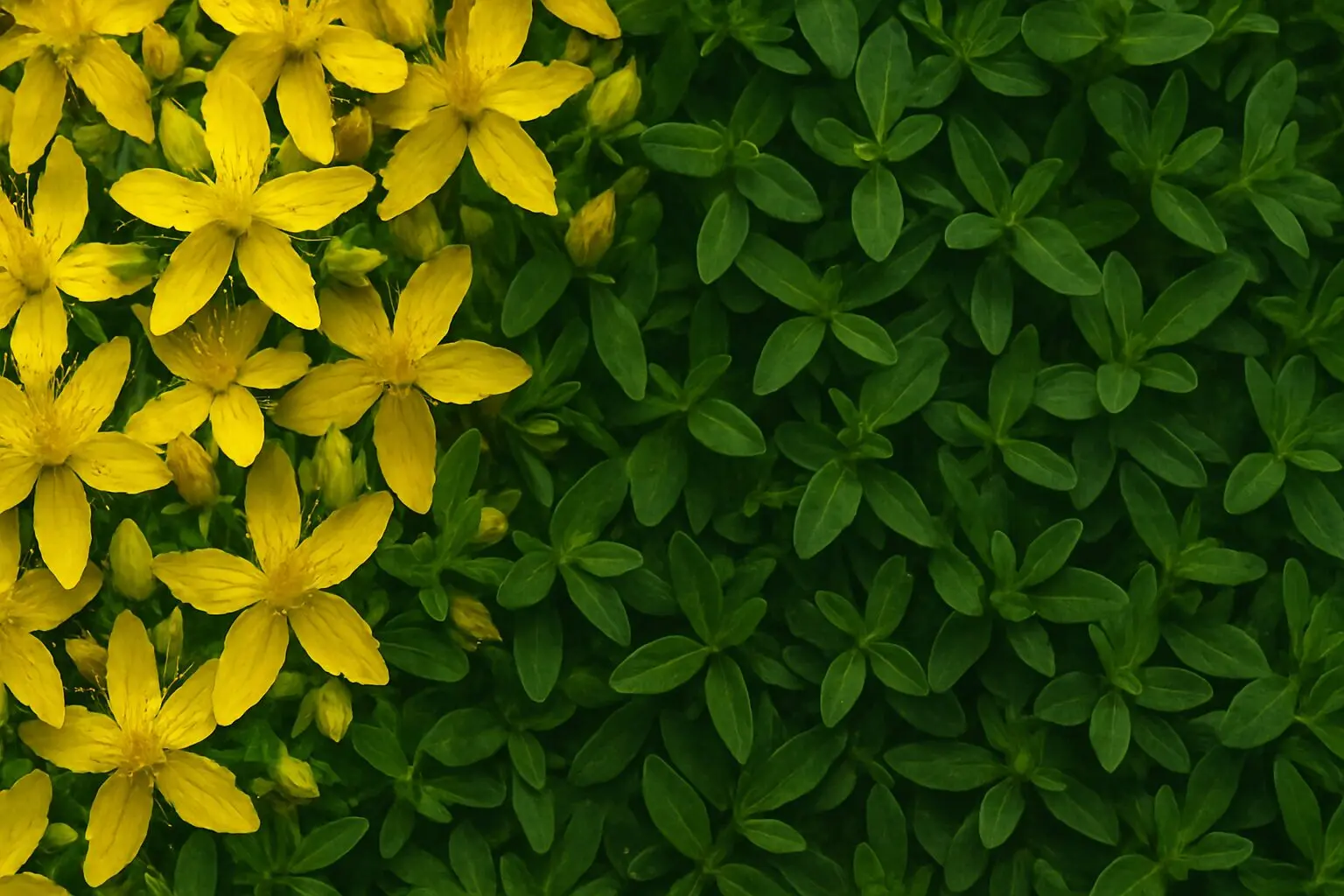
Hypericum perforatum
St. John’s wort is one of Europe’s most important medicinal plants. It is mainly used for low mood and nervous tension, but also for digestive complaints and, externally, for skin care. This overview looks at its active compounds, how to use it and why interactions matter so much.
Main uses of St. John’s wort
- Mild to moderate depression
Standardized extracts influence the messengers serotonin, dopamine and noradrenaline. For mild to moderate depression, studies show an effect comparable to standard antidepressants. Always discuss this with a doctor first. - Nervous tension
The herb can ease restlessness, irritability and tension-related sleep problems. - Digestion and bile flow
Traditionally used for a feeling of fullness and indigestion, especially after heavy meals. - Skin healing
Externally, St. John’s wort oil supports the healing of minor wounds, burns and irritated skin.
Key active compounds
| Compound | Effect |
|---|---|
| Hyperforin | Mood-lifting, anti-inflammatory |
| Hypericin | Affects neurotransmitters, increases sensitivity to light |
| Flavonoids | Antioxidant, support blood vessels |
| Tannins | Astringent, anti-inflammatory |
| Essential oils | Antimicrobial, calming |
| Xanthones | Antibacterial, antifungal |
How to use it
- Tea: one tablespoon of dried herb per 250 ml of boiling water, steep for 10 minutes, one to two cups a day.
- Tincture: a few drops in water for nervous tension or digestive discomfort.
- Oil: externally for skin care and minor inflammation.
- Standardized extracts: the form used for depression – only after medical advice.
Important: St. John’s wort weakens the effect of many medicines, including hormonal contraceptives, blood thinners, HIV medication, immunosuppressants and some cancer and heart drugs, and must not be combined with antidepressants. It makes the skin more sensitive to sunlight. Always ask your doctor or pharmacist before using it if you take any medication.
What about ADHD, leaky gut and insulin resistance?
- ADHD: A clinical trial in children and adolescents found St. John’s wort no more effective than a placebo. It is not recommended for ADHD.
- Gut health: Its anti-inflammatory and bile-stimulating effects may support digestion, but there is no research on leaky gut specifically.
- Insulin resistance: Stress reduction can indirectly benefit blood sugar control, but there is no direct evidence that St. John’s wort improves insulin sensitivity.
Summary
St. John’s wort is a well-researched remedy for mild to moderate low mood, with traditional uses for digestion and skin. Its effects are real – and so are its interactions. Use it thoughtfully and with professional advice.