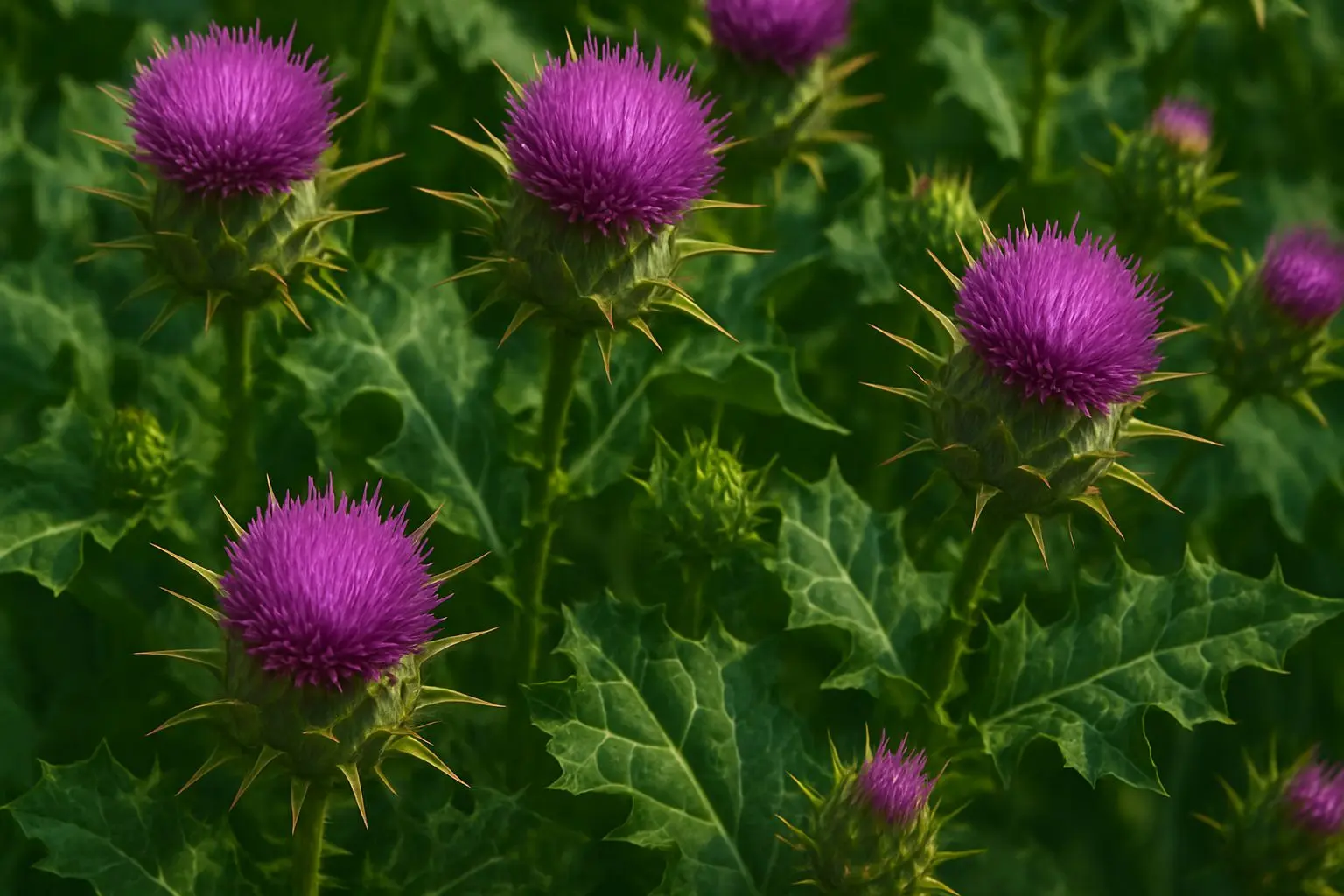
Silybum marianum
Milk thistle is the best-known herbal remedy for the liver. Its seeds contain silymarin, a group of compounds that protect liver cells in laboratory studies and are used in medicine, for example in some cases of mushroom poisoning. Here is what milk thistle can – and cannot – do.
What is milk thistle?
Milk thistle is a spiny plant from the daisy family with purple flowers and leaves marked by white veins. The active compounds are found in the seeds: silymarin, a mixture of flavonolignans, with silibinin as the most important component.
Health benefits of milk thistle
1. Protects liver cells
Silymarin has antioxidant and anti-inflammatory effects and can stabilize the membranes of liver cells. It is used for fatty liver disease and to support the liver after damage from alcohol or medication. Clinical results are mixed: some studies show improved liver values, others no clear benefit. It supports, but does not replace, medical treatment and lifestyle changes.
2. Supports digestion
Milk thistle stimulates bile flow, which helps digest fats and can ease bloating and a feeling of fullness. In some people it has a mild laxative effect.
3. Antioxidant effects
Silymarin neutralizes free radicals and helps protect cells from oxidative stress.
4. May help with blood sugar control
Some studies show that silymarin can improve blood sugar and insulin sensitivity in people with type 2 diabetes. The results are promising but not yet conclusive.
How to use milk thistle
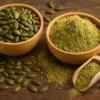
- Ground seeds – one to two teaspoons a day in yogurt, porridge or smoothies.
- Tea – from crushed seeds; mild, as silymarin dissolves poorly in water.
- Standardized capsules – the form used in studies and the only way to get a meaningful dose of silymarin.
- Cold-pressed oil – for salads; do not heat it.
Safety
Milk thistle is generally well tolerated; occasional side effects are mild digestive upset. People allergic to daisy-family plants may react to it. Avoid it during pregnancy and breastfeeding unless your doctor advises otherwise, and talk to your doctor if you have gallstones, hormone-sensitive conditions or take diabetes medication.
Worth knowing
- Milk thistle has been used for liver complaints since ancient times.
- According to legend, the white veins on the leaves came from drops of the Virgin Mary’s milk – hence the name “Mary’s thistle”.
- An intravenous form of silibinin is used in hospitals as an antidote for death cap mushroom poisoning.
Summary
Milk thistle is the classic herbal remedy for the liver, with silymarin as its active ingredient. It is safe for most people and may support liver health, though the clinical evidence is mixed. For real liver problems, a doctor and a liver-friendly lifestyle remain essential.