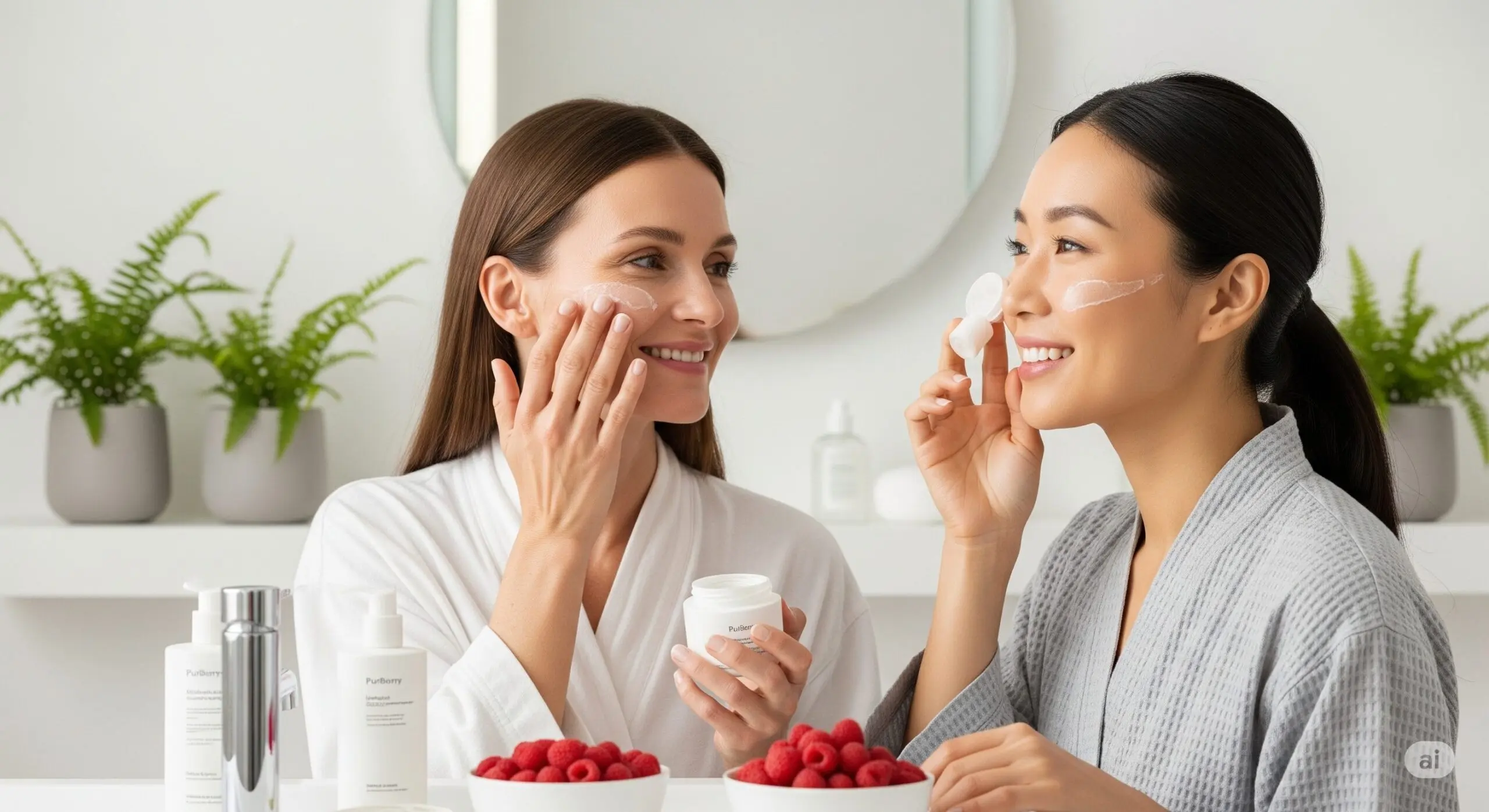
Cutis faciei
How to care for the skin on your face – naturally, sensibly and without unnecessary products
What happens in your facial skin?
The skin on your face is thinner and more exposed than most other skin on your body. Every day it deals with UV light, air pollution, cold, heat, cosmetics and hormonal changes. It also reacts to sleep, stress and diet – but genetics play a big role too.
The structure of your facial skin:
- Epidermis – the protective outer layer, which renews itself about every four weeks in young adults, and more slowly with age. Its outermost layer forms the skin barrier, which keeps moisture in and irritants out.
- Dermis – contains collagen, elastin and hyaluronic acid, which together give the skin firmness, elasticity and volume.
- Hypodermis – the fatty layer underneath, which provides cushioning and shape. Loss of facial fat with age contributes to a more hollow look.
With age, and especially with a lot of sun exposure, collagen and elastin decrease. The skin becomes thinner and drier, and wrinkles appear.
Skin care traditions from around the world
- Japan: double cleansing with oil and a gentle foam is widespread, along with consistent sun protection.
- Korea: multi-step routines with light layers of moisture, fermented ingredients and daily sunscreen; facial rollers and gua sha are popular.
- India: facial massage with warm oils and traditional ingredients such as turmeric and sandalwood.
- France: a minimalist approach with few, high-quality products, micellar water and rose water.
What they have in common: gentle cleansing, regular care and protection from the sun.
Food for healthy skin
Good for your skin:
- Berries, rosehip and aronia – rich in antioxidants and vitamin C
- Avocado and olive oil – healthy fats and vitamin E
- Carrots and pumpkin – beta-carotene, which the body converts into vitamin A
- Leafy greens – vitamins, minerals and antioxidants
- Fermented foods such as sauerkraut, kimchi or yogurt – the link between the gut and skin is being researched
- Oily fish, walnuts and flaxseed – omega-3 fatty acids
Better to limit:
Lots of sugar, highly processed foods and alcohol. A diet with many quickly digestible carbohydrates is associated with more acne in some studies, and alcohol dehydrates the skin and can worsen rosacea.
Collagen – the scaffolding of the skin
Collagen makes up more than 70% of the dry weight of the dermis and gives the skin firmness and resilience. From the mid-twenties, the body produces about 1% less collagen each year; after menopause, the decline speeds up. UV light and smoking accelerate collagen breakdown considerably.
Food sources of collagen:
- Bone broth made from chicken, beef or fish with skin, cartilage and tendons
- Small fish eaten whole, such as sardines
- Gelatin, for example in homemade fruit jellies
Dietary collagen is broken down into amino acids and peptides during digestion. Some studies with collagen peptide supplements found slightly better skin moisture and elasticity, but many of these studies were funded by manufacturers.
Nutrients your body needs to make collagen:
| Nutrient | Function |
|---|---|
| Vitamin C (rosehip, peppers, acerola) | Essential for collagen synthesis |
| Silica (oats, nettle, cucumber) | Involved in connective tissue; evidence for the skin is limited |
| Amino acids (proline, glycine – in broth, eggs, legumes) | Raw materials for collagen |
| Anthocyanins (blackcurrant, aronia, blueberries) | Antioxidants that may help protect collagen |
| Omega-3s (flaxseed, fatty fish) | Anti-inflammatory; support the skin barrier |
Also important:
- Enough protein overall
- Zinc and copper – involved in tissue repair
- Protection from UV light – the most effective way to preserve collagen
What breaks down collagen?
- UV radiation – even on cloudy days
- Smoking
- A lot of sugar, which promotes the formation of advanced glycation end products (AGEs) that stiffen collagen
- Chronic stress and lack of sleep
Facial massage – a few minutes a day
A gentle facial massage:
- promotes circulation,
- can reduce morning puffiness,
- helps spread oils and creams evenly,
- is relaxing.
How to do it:
- Wash your hands and cleanse your face
- Apply a few drops of oil, such as jojoba, rosehip or hemp seed oil
- Using your fingertips, massage gently upwards and outwards
- Use a facial roller or gua sha stone if you like – cooled in the fridge, it feels particularly refreshing
- A few minutes are enough
Avoid massaging areas with active acne or inflamed skin.
Ingredients: what to know
Ingredients that are often criticized – and what is behind them:
| Ingredient | What to know |
|---|---|
| Parabens | Well-studied preservatives, considered safe in permitted amounts in the EU |
| SLS/SLES | SLS can irritate sensitive skin; SLES is milder |
| PEGs | Generally safe; avoid on damaged skin |
| Silicones | Generally well tolerated; do not clog pores in most people |
| Formaldehyde releasers | Known allergens; strictly limited in the EU |
| Phthalates | Some are banned in EU cosmetics because of hormonal effects |
| Aluminum salts | Used in antiperspirants; no proven link to Alzheimer’s or breast cancer |
| Fragrances and dyes | Common allergy triggers, especially in sensitive skin |
For sensitive skin, fragrance-free products with short ingredient lists are often the best choice – whether natural or synthetic.
Ingredients with good evidence:
| Ingredient | What it does |
|---|---|
| Hyaluronic acid | Binds moisture, plumps the skin surface |
| Vitamin C | Antioxidant, brightens, supports collagen |
| Vitamin E | Antioxidant, supports the skin barrier |
| Niacinamide (Vitamin B3) | Strengthens the barrier, reduces redness, balances oil |
| Rosehip oil | Nourishes, may improve scars and evenness |
| Hydrosols (e.g., rose water) | Refresh and soothe |
| Bakuchiol | Plant-based alternative to retinol; gentler, but less well studied |
| Panthenol & Allantoin | Calm, repair, and protect |
The best-studied ingredients against skin aging are still sunscreen and retinoids (such as retinol).
What your skin may be telling you
| Symptom | Possible causes |
|---|---|
| Breakouts on the chin and jaw | Hormones (e.g. PCOS), stress, cosmetics, friction |
| Dark under-eye circles | Genetics, thin skin, lack of sleep, allergies, sometimes iron deficiency |
| Red patches | Rosacea, eczema, seborrheic dermatitis, irritation from products |
| Flaky or dry skin | Cold, dry air, over-cleansing, eczema; rarely nutrient deficiency |
| Pigmentation | UV exposure, hormones (melasma), inflammation after acne |
Persistent or worsening skin changes – and any mole that changes in size, shape or color – should be checked by a dermatologist.
Simple home remedies
Avocado face mask:
- ½ ripe avocado
- 1 tbsp natural yogurt
- 1 tsp honey
Mash, apply for 15 minutes and rinse with lukewarm water. Good for dry skin.
Green tea and aloe toner:
- 1 bag of green tea (brewed and cooled)
- 1 tbsp aloe vera gel
Mix and apply with a cotton pad in the morning and evening. Keep in the fridge and use within three days.
Take a moment in front of the mirror
Do you know your skin type? Dry, oily, combination, sensitive – the right care depends on it. Many people use too many products. Often, a simple routine is enough: a gentle cleanser, a suitable moisturizer and sunscreen in the morning, and possibly one active ingredient such as retinol in the evening.
Your skin also reacts to how you live: stress can trigger flushing or breakouts, and a tense week often shows up as dull skin. Sleep, exercise, a varied diet and breaks from screens and make-up are part of good skin care too.
In summary
Healthy facial skin needs gentle cleansing, enough moisture, daily sun protection and a few well-chosen active ingredients. A varied diet, good sleep and not smoking support it from the inside. Natural ingredients can be a nice addition – but “natural” is not automatically better, and “synthetic” not automatically harmful.