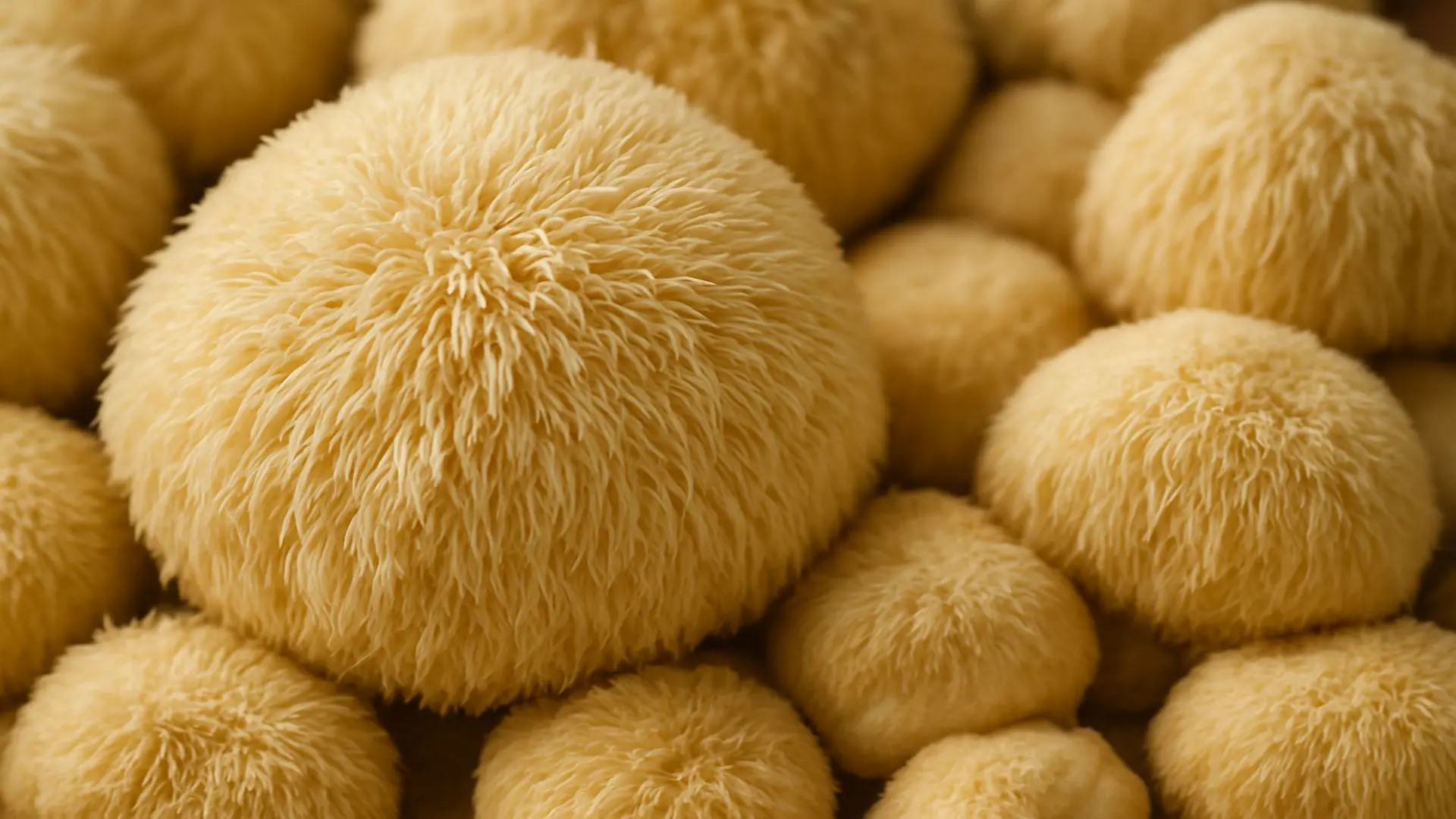
Hericium erinaceus
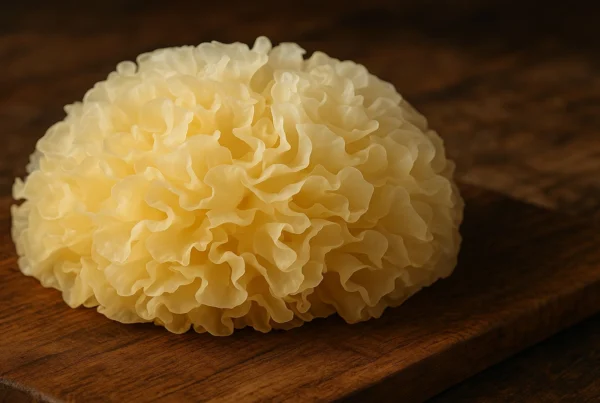
Lion’s mane doesn’t look like a typical mushroom. With its shaggy, snow-white spines it really does resemble a lion’s mane. It is an edible mushroom with a mild, seafood-like taste and is also used as a medicinal mushroom in East Asia. Today it is mainly researched for its possible effects on the brain and nerves, mood and digestion.
What makes it interesting: lion’s mane contains compounds that stimulate the production of nerve growth factor (NGF) in laboratory studies. Whether this translates into noticeable benefits in humans is still being investigated.
What are the possible health benefits of lion’s mane?
Most of the research comes from cell and animal studies; there are only a few small studies in humans. Areas being studied include:
- Memory and cognition – a small Japanese study in older adults with mild cognitive impairment found improved test scores
- Mood – small studies suggest a reduction in mild anxiety and depressive symptoms
- Nerve regeneration – faster nerve recovery after injury in animal studies
- Neurodegenerative diseases such as Alzheimer’s and Parkinson’s – protective effects in animal models
- Stomach and gut – protective effects on the stomach lining in animal studies; traditionally used for gastritis
- Immune system – beta-glucans modulate the immune response
- Blood sugar – glucose-lowering effects in animal studies, but hardly any human data
There is no evidence that lion’s mane treats ADHD, multiple sclerosis, diabetes, leaky gut or autoimmune diseases. If you have any of these conditions, it can at most be a supplement to medical care.
How might lion’s mane support the brain?
Two groups of compounds in lion’s mane – hericenones in the fruiting body and erinacines in the mycelium – stimulate the production of NGF in laboratory studies. NGF is important for the growth, maintenance and repair of nerve cells.
In a 16-week study in Japan, older adults with mild cognitive impairment who took lion’s mane powder performed better in cognitive tests than the placebo group. The effect faded after they stopped taking it. Other studies in healthy adults have found small or no effects. Lion’s mane is a promising candidate, but not a proven nootropic.
Can it improve mood and reduce anxiety?
In a small study of women going through menopause, four weeks of cookies containing lion’s mane reduced feelings of anxiety and irritability compared with placebo. Animal studies point to anti-inflammatory effects in the brain and effects on neurotransmitters.
The data are too limited to recommend lion’s mane for depression or anxiety disorders. These conditions belong in professional hands.
What about the gut?
In traditional Chinese medicine, lion’s mane is used for stomach complaints. In animal studies, extracts protected the stomach lining, and they inhibited the growth of Helicobacter pylori in the laboratory. Its fiber and beta-glucans may also feed beneficial gut bacteria.
Human studies on gut health are lacking. The gut and brain communicate closely, which is one reason why researchers are interested in mushrooms like lion’s mane – but the connection has not yet been studied in detail.
And the immune system?
Like many medicinal mushrooms, lion’s mane contains beta-glucans that modulate the immune system in laboratory and animal studies, including activating immune cells in the gut lining. Whether this means fewer infections in humans is unclear.
What are the active compounds?
| Compound | Biological Action |
|---|---|
| Hericenones | Stimulate Nerve Growth Factor (NGF) for neuron repair |
| Erinacines | Cross the blood–brain barrier and support neuroplasticity |
| β-glucans | Modulate immunity and reduce inflammation |
| Amycenone | Antioxidant effects and mood support |
| Ergosterol | Precursor to vitamin D; supports immune function |
The effects in this table are based mainly on laboratory and animal studies. Erinacines are found mainly in the mycelium, hericenones in the fruiting body, so the composition of products varies a great deal.
How to use lion’s mane
- Powder or capsules – usually 500–3000 mg a day, as in the studies; take with a meal
- Dual extract (water and alcohol) – contains both water- and alcohol-soluble compounds
- Mushroom coffee blends – usually contain only small amounts
- Fresh in the kitchen – fry slices in butter or oil like scallops or tofu
Look for products with stated contents of beta-glucans and other active compounds and independent laboratory testing.
Uses in the kitchen, naturopathy, cosmetics and gardening
- Kitchen – fresh as a delicacy, dried in soups or as powder
- Naturopathy – traditionally for the stomach, nerves and general vitality
- Cosmetics – in creams and serums for its antioxidant properties
- Gardening – can be grown at home on hardwood logs or sawdust
Combinations
- With reishi – often combined for stress and sleep
- With turmeric and black pepper – in a warm drink or smoothie
- With green tea or L-theanine – for calm concentration
- With fiber-rich foods such as oats or Jerusalem artichoke – good for the gut
There are hardly any studies on such combinations.
Warnings and precautions
- Do not use if you are allergic to mushrooms; allergic skin and respiratory reactions have been reported
- May lower blood sugar – monitor carefully if you take diabetes medication
- May affect blood clotting – caution with blood thinners and before surgery
- Not enough safety data for pregnancy and breastfeeding
- Talk to your doctor if you take psychiatric medication
Disclaimer: The information provided in this article is educational and does not replace medical advice. If you’re under medical treatment, taking prescription medications, pregnant, or breastfeeding, consult your doctor before using medicinal mushrooms.
Recipe: creamy mushroom cocoa
Ingredients:
– 1 tsp lion’s mane extract (powder)
– 1 tsp raw cacao
– 1/2 tsp ashwagandha extract (optional; not during pregnancy)
– 1 cup plant-based milk (e.g., oat or almond)
– 1/2 tsp coconut oil
– Pinch of cinnamon and cardamom
– Optional: date or honey to taste
Instructions:
Warm the milk without boiling it. Add all ingredients and blend until creamy.
Did you know?
In Japan, lion’s mane is called yamabushitake, after the yamabushi – ascetic mountain monks whose ceremonial garments had tassels resembling the mushroom. It is also said to have been used by Buddhist monks to support concentration during meditation.
In summary
Lion’s mane is a tasty edible mushroom and one of the most interesting medicinal mushrooms in brain research. Its ability to stimulate nerve growth factor is well documented in the laboratory, but the human studies are still small. If you want to try it, use a high-quality product, give it a few weeks and keep realistic expectations.