Why stable blood sugar matters
Whether you have diabetes or prediabetes, or simply feel tired after meals, stable blood sugar affects:
- your energy levels,
- your concentration,
- your hunger and cravings,
- your long-term health.
When blood sugar is raised over long periods, insulin resistance develops – a major factor behind:
- type 2 diabetes,
- fat around the abdomen,
- low-grade inflammation,
- poorer concentration and mood swings.
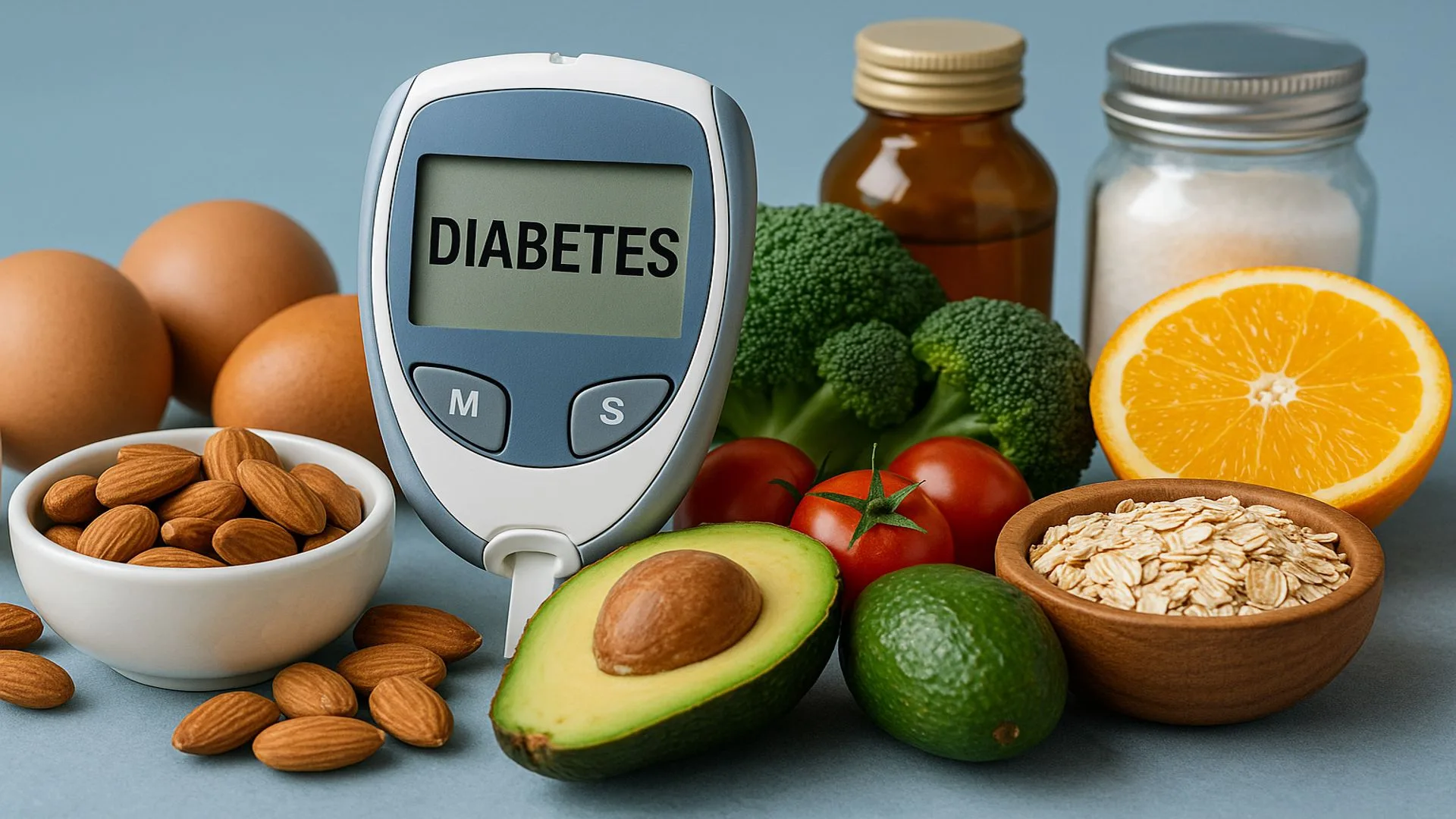
Even without diabetes, sharp spikes and dips in blood sugar can leave you tired and hungry. The following foods can help keep it more stable – as part of a balanced diet, not as a substitute for treatment.
1. Cinnamon
Why it helps:
Cinnamon contains compounds such as cinnamaldehyde that may improve insulin sensitivity and slow the breakdown of carbohydrates. Studies show modest reductions in fasting blood sugar, although results vary.
Which type:
Ceylon cinnamon (“true cinnamon”) contains much less coumarin than cassia cinnamon, which can harm the liver in larger amounts. For daily use, Ceylon is the safer choice.
How to use it:
Add half a teaspoon a day to porridge, yogurt, smoothies or tea.
2. Berries (blueberries, blackberries, raspberries)
Why they help:
Berries are rich in fiber and anthocyanins and have a low glycemic index. Their compounds can soften the rise in blood sugar after meals.
Research:
In one study, people with insulin resistance who drank a blueberry smoothie every day for six weeks showed improved insulin sensitivity compared with a placebo drink.
How to use them:
Half a cup of fresh berries or one tablespoon of freeze-dried berries in:
- smoothies,
- porridge,
- salads.
3. Broccoli and broccoli sprouts
Why they help:
Broccoli provides sulforaphane, which has anti-inflammatory effects. In a study of people with poorly controlled type 2 diabetes, broccoli sprout extract lowered fasting blood sugar.
Sprouts or florets:
Broccoli sprouts contain many times more of the precursor glucoraphanin than mature broccoli.
How to use them:
Add raw sprouts to salads and sandwiches, or blend them into smoothies.
4. Sweet potatoes – prepared the right way
Why they help:
Sweet potatoes provide fiber, beta-carotene and potassium. How you cook them matters a lot: boiled sweet potatoes have a moderate glycemic index, while baked or roasted ones raise blood sugar much faster.
How to use them:
- Boil or steam them and eat them with the skin.
- Combine them with protein and healthy fat such as olive oil.
- Let them cool before eating – this creates resistant starch, which feeds gut bacteria.
5. Nuts (especially almonds and walnuts)
Why they help:
Nuts are low in carbohydrates and rich in fiber, healthy fats and magnesium, which is involved in insulin action.
Bonus:
Eaten with carbohydrate-rich foods, they can soften the rise in blood sugar.
How to use them:
- A handful as a snack between meals
- Sprinkled over porridge or salads
- As unsweetened nut butter
6. Chickpeas and lentils
Why they help:
Legumes have a low glycemic index and are rich in soluble fiber and protein, which slow the absorption of glucose.
Worth knowing:
Studies show a “second-meal effect”: eating legumes at lunch can improve the blood sugar response to the next meal.
How to use them:
- As hummus
- In soups, curries and stews
- Roasted as a crunchy snack
7. Apples
Why they help:
Apples contain pectin, a soluble fiber that slows digestion. Despite their sweetness, they have a low glycemic index.
Tip:
Eat the skin – that is where most of the fiber and polyphenols are.
How to use them:
- Sliced with almond butter
- Diced into salads
- Whole rather than as juice, which lacks the fiber
8. Garlic
Why it helps:
Meta-analyses show that garlic supplements can modestly lower fasting blood sugar and improve cholesterol. Garlic also has anti-inflammatory properties.
How to use it:
- Crush it and let it rest for 10 minutes before cooking, so more allicin forms
- In sauces, dressings or roasted whole
- Mixed with olive oil and lemon as a dressing
9. Green tea
Why it helps:
Green tea contains catechins, especially EGCG. Studies show small improvements in fasting blood sugar and insulin sensitivity with regular consumption.
How to use it:
- Two to three cups a day
- Ideally between meals
- With lemon or mint if you like
10. Dark chocolate (85% cocoa and above)
Why it helps:
High-cocoa dark chocolate is rich in flavanols, which may improve insulin sensitivity and blood vessel function.
Caveat:
Avoid low-cocoa or heavily sweetened bars – the benefit comes from the cocoa, not the sugar.
How to use it:
- One or two small squares after a meal
- Grated over porridge or yogurt
Summary table
| Food | Key compound | Benefit |
|---|---|---|
| Cinnamon | Cinnamaldehyde | May improve insulin response |
| Berries | Anthocyanins, fiber | Softer rise after meals |
| Broccoli sprouts | Sulforaphane | Anti-inflammatory, may lower fasting glucose |
| Sweet potatoes (boiled) | Fiber | Moderate glycemic load |
| Nuts | Magnesium, fiber, fat | Soften glucose rise |
| Legumes | Soluble fiber, protein | Slow carbohydrate absorption |
| Apples | Pectin | Slow digestion |
| Garlic | Allicin | May lower fasting glucose |
| Green tea | Catechins (EGCG) | Supports glucose metabolism |
| Dark chocolate | Flavanols | May improve insulin sensitivity |
Practical tips
- Combine several foods in one meal, for example a berry and nut smoothie with cinnamon.
- Always pair carbohydrates with protein, fat or fiber.
- Vary the foods so your diet stays interesting.
- If you take diabetes medication, monitor your blood sugar when you change your diet and talk to your doctor.
Read more: What Is Type 2 Diabetes? A Clear Guide